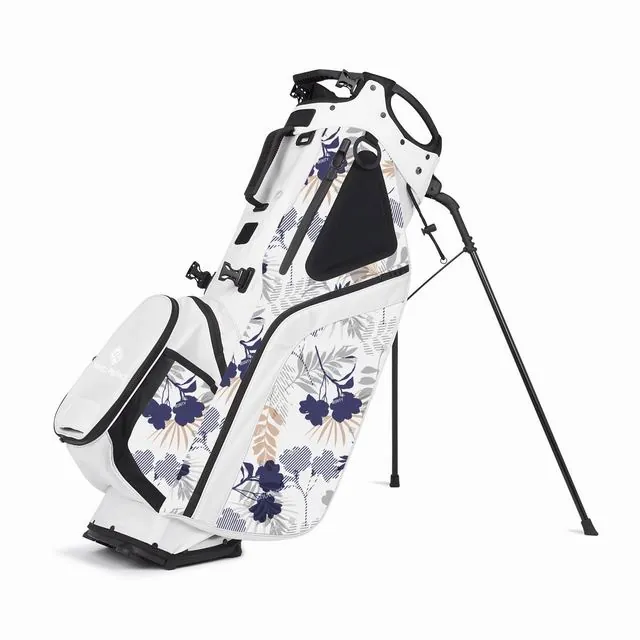
Titleist 2025 golf bags are a tightly segmented premium range in which the 14-way full-length divider, rigid moulded base, robust zippers and reinforced stress points separate genuine engineering from surface marketing — and for a walker the Players 4+, and for a player who both walks and rides the Hybrid 14, remain the professional recommendations. Read against a factory engineer's checklist, the 2025 line earns its premium in construction rather than gadgetry, while the same four construction standards are fully reproducible under an OEM private label at wholesale cost. This complete analysis reads every family in the line through those four verifiable checks so you can judge any premium bag, Titleist or custom, on evidence rather than reputation.
Reading a Legacy Name: What Titleist's 2025 Moves Reveal
It is easy to review a name like Titleist by its reputation, but the 2025 line deserves to be read as a set of decisions, because those decisions reveal where the whole premium bag market is heading. The clearest signal is the continued move toward full-length, 14-way divider tops as the default on the carry bags, which trades a few grams of weight for noticeably better shaft protection. The second is the hybrid category: rather than expecting a golfer to own both a stand bag and a cart bag, Titleist is building models that competently do both, settling the old "walk or ride" dilemma for the many players who genuinely do both week to week.
A third decision worth noting is retained focus on structure over gadgetry. Titleist keeps its innovation in the fabric spec, the base and the divider architecture rather than chasing straps, mounts and smart accessories for their own sake. That restraint is itself a premium trait, because it keeps the bag reliable, serviceable and hard-wearing — exactly the properties a golfer who has spent significantly on clubs wants in the object that protects them. Understanding these choices helps you judge not just Titleist but any premium bag you compare against it.
The Four Verifiable Premium Standards
To make a premium claim testable, break it into the four construction points that a factory actually checks and that separate a lasting bag from a one-season shell. First, the fabric: heavier, tightly woven nylons resist the abrasion of carts, wet grass and baggage handlers, and they are a measurable specification you can compare. Second, the base: a rigid moulded bottom plate keeps its shape under a full set and stops the dividers from distorting over time — press on the base to test it flexes less rather than more. Third, the zippers: quality hardware glides under tension and survives hard handling, and you can feel the difference in a few pulls. Fourth, the stress points: reinforcement at the handle, strap anchors and top collar is where a premium bag spends the bar-tack stitching that keeps it alive for years.
These four points are not subjective. They are exactly the checks that our affiliated factory runs before a bag ships, and they appear in the quality standards guide we publish for buyers. When you hold a Titleist 2025 bag against a cheaper alternative, run these four checks side by side and the construction gap becomes obvious even where the badge is not. When they are run and the four points both pass, the practical equipment gap between a premium name and a well-made OEM bag narrows sharply.
The Real Differences That Drive Price
If you are deciding whether Titleist's price is worth it to you personally, separate the drivers into ones you can sense and ones you may never. The fully-loaded components — the full-length dividers, the quality zippers, the rigid base, the durable fabric — are things you feel every round and for years, and they justify premium spend for most golfers. The brand, the R&D story and the resale status are real values but intangible, and they matter far more to some buyers than to others. Layering the two honestly is the way to decide rather than being swayed by either the logo or the discount.
For a serious player the construction alone may earn the price. For a casual golfer or a brand planning a retail line, the same engineering is available at wholesale from a capable factory — the guide to cart bag size and dimensions, and the range of cart bags on the products page, show how that spec maps out. The difference you cannot buy is the badge, and you should be clear whether you need that badge or are simply being drawn by it.
Testing a Bag Like an Engineer Before You Commit
Here is a short engineer's test you can run on any premium bag, Titleist included, without a workshop. Lift the bag empty and loaded to feel the weight distribution. Set it on a flat surface and press down to confirm the base does not rock or flex. Open and close every zipper under a little tension. Check that the divider top is genuinely full-length, reaching toward the bottom of the bag, and that the clubs stay separated. Pull on the handle and strap anchors to feel the stitching. Run these six checks and you will have read the bag's real construction is inherited better than any spec sheet, and you will know what you are actually paying for.
The point of the test is to make the decision yours, based on evidence rather than reputation on one side and price on the other. Whether the verdict lands on Titleist or on a private-label bag built to the same four standards, you will have chosen with your own measurements. That is how a thoughtful golfer, or a brand buying a line, reaches a conclusion that survives contact with the first season of real use.
Decision Framework: When Titleist, When Custom
Summarising the honest advice: choose Titleist when you value the badge, the R&D story and the guarantee of the four premium standards in one ready-packaged product, and you are happy to pay the premium for that. Choose a well-specified custom or private-label bag when you want the same engineering under your own brand, at wholesale cost, with distinctive styling and colourway that no stock product offers. The cart bags products page and the OEM/ODM services overview are the two doors into each decision, and the wholesale pricing guide tells you what the custom route actually costs.
Conclusion
Titleist's 2025 bag line is a masterclass in segmenting by playing style: a carry-first stand bag, a hybrid for both world's, a flat-base cart bag for riders, and an imposing Tour Staff bag for teams and staff. Across all four, the real engineering lives in full-length dividers, a rigid base, robust zips and reinforced stress points — the same four checks that define any premium golf bag. Understand which family matches your game, judge any premium bag on those four points, and if brand equity is the only thing you need to replicate, a well-specified OEM bag can deliver the engineering under your own label. That is the honest, factory-level reading of the 2025 line.
Titleist 2025 Golf Bag Collection: An Engineer's Reading of the Line
Titleist does not sell a weekend-toy bag; its 2025 golf bag line is a tightly segmented family engineered around specific playing styles, and the difference matters to anyone who buys on performance rather than logos. The core of the 2025 range is the Players 4+ stand bag for walking golfers, the Hybrid 14 for players who alternate between carry and cart, a range of cart bags, and the Tour Staff bag built for tournament and staff use. Across the line the consistent themes are full-length dividers, weight-conscious construction and premium materials. This analysis reads those bags with a factory engineer's eye to separate real engineering from marketing.
Players 4+ Stand Bag: The Walking Golfer's Focus
The Players 4+ is Titleist's dedicated carry bag for 2025, and its design story is weight and balance rather than raw lightness marketing. It uses a lightweight frame and a slim profile so that a full set of fourteen clubs sits low and close to your back, which lowers the centre of gravity while walking. A full-length 14-way divider top keeps every shaft separated to the bottom of the bag, protecting graphite shafts from contact during the carry a rider never feels. Four-way and 14-way top options give a buyer the choice between faster access and full club separation.
For golfers who split time between walking and riding, the Hybrid 14 is the collection's bridge model. Its structure supports a stand for walking while the base and pass-through are shaped for cart use, so it transitions without the compromises of a pure stand or pure cart bag. In factory terms the Hybrid 14 is the most complex construction in the line, because it has to build a stable fold-out leg system into a base that also needs to sit flat on a cart; that dual requirement is exactly why hybrid bags are more expensive to engineer than either single-purpose option.
Cart Bags and the Tour Staff Bag: Built for a Mounted Life
Titleist's cart bags trade the folding leg system for a wide, flat, reinforced base that seats level on a trolley, shifting the weight budget into pockets and structure rather than portability. The Tour Staff bag is the most imposing of the line: an oversized silhouette with a deep, rigid base, roomy pockets and large, prominent branding panels designed for a tour staff member or a team bag that will be photographed. Because a staff bag is mounted, not carried, its weight is almost irrelevant to its performance — the design spends everything on presence, capacity and structure.
What all three families share is a commitment to full-length dividers and quality zips and fabrics. In a factory, the tell of a premium bag is not the badge but the load-bearing decisions: thick seam reinforcement at the handle and base, zippers that glide smoothly under tension, and a moulded base that does not flex under a full set. Those are the places Titleist spends its cost, and they are the places a cheaper bag visibly cuts corners — which is precisely why premium bags feel unfinished after a season while these hold their shape.
How Titleist 2025 Bags Compare: A Head-to-Head Table
| Feature | Players 4+ | Hybrid 14 | Cart Bag | Tour Staff |
|---|---|---|---|---|
| Primary use | Walking / carry | Hybrid carry + cart | Cart / riders | Tour, staff, team |
| Divider top | 14-way full-length opt. | 14-way full-length | 14-way full-length | 14-way full-length |
| Leg system | Yes (stand) | Yes (stand) | No (flat base) | No (flat base) |
| Base type | Stand base + feet | Fold leg + cart-capable | Wide flat reinforced | Oversized flat reinforced |
| Weight budget | Minimise (carried) | Balanced | Spent on pockets/structure | Spent on presence/capacity |
| Best for | Walkers | Players who both carry & ride | Riders | Team & tournament graphics |
The table maps the real trade-off: every kilogram Titleist does not spend on a leg system goes into pocket volume, base reinforcement or in the Tour Staff's case sheer canopy. There is no single "best" Titleist bag — there is only the family whose design matches how you actually play. The Players 4+ is wrong for a rider; the Tour Staff is pointless for a walker; the Hybrid 14 is the sensible default for the player who does a bit of both.
Construction and Materials: What the Badge Does Not Tell You
Under the shell, premium construction shows up in four verifiable places. First, the fabric spec: heavier, tighter-weave nylons resist abrasion against carts and wet grass. Second, the base: a rigid, moulded bottom plate that will not sag and distort the dividers over time. Third, the zipper hardware: robust zips with smooth action that survive years of hard opening. And fourth, the seam/bar-tack reinforcement at the handle, strap anchors and top collar, where stress concentrates. These four are exactly the inspection points a factory quality controller checks before a bag ships, and they are the honest difference between a bag that lasts and one that fails early.
Titleist nails all four in the 2025 line, which is why the bags command a premium. But the same four checks are how you judge any premium golf bag — including an unbranded OEM bag built to the same standard. If you are comparing Titleist against a custom or private-label option, compare on these four points rather than on the logo, and you will make a more reliable decision.
Care, Maintenance and Lifecycle Value
Titleist bags are engineered for a long lifecycle, but the economics only materialise if the bag is looked after. A bag that lasts six to ten seasons delivers far more value per year than a cheaper one replaced every two years. When you divide the purchase price by the years of real use, a dependable Titleist bag frequently turns out to be the more economical choice even though its sticker is higher than a budget model.
Realising that lifecycle depends on small habits. Empty the bag when it will sit unused, keep it out of direct sun for entire seasons, and address a stiff zipper or a slipping buckle early rather than living with it. Wash the shell occasionally with mild soap and water instead of strong detergents that attack the coating. These are not Titleist-specific chores; they are the cost of keeping any quality bag in service, and our maintenance guide covers them methodically.
Storage habits also protect the longest-lived parts of a Titleist bag. Between seasons, remove the clubs, loosen the straps and store the bag upright on its base on a shelf, avoiding the folded or hanging positions that stress the frame and flatten the padding. Keep it in a cool, dry space rather than a hot garage or damp basement. Zippers should be closed but not forced, and any hardware that feels gritty can be lightly cleaned and lubricated with a product made for zippers and buckles.
Handling the fabric correctly also extends service. Many bags carry a durable water-resistant coating that degrades in the sun and under harsh wash chemicals. Spot-clean with mild detergent and a soft brush, rinse thoroughly and air-dry away from direct heat. Avoid dry cleaning and strong solvents, which strip the finish and can stiffen or fade the material. These steps cost minutes and meaningfully extend the years of service, and they apply equally to branded or private-label bags.
For fleet and rental operators, lifecycle is the whole business case. A fleet that invests in durable construction — whether Titleist stock or an equivalent OEM build — recovers its cost over dozens of rental rounds, while a fleet that buys the cheapest bag pays again and again in replacements and downtime. In volume, reliability is the cheapest thing you can buy.
Price, Positioning and Value in the 2025 Range
Titleist positions its bags as premium equipment, and the 2025 pricing sits accordingly. A buyer pays for the R&D, the materials and the badge, and for many golfers the badge itself carries brand value that a no-name bag cannot match. The value question is whether the performance gap justifies the price gap over a well-built alternative. For a walking golfer who wants the 14-way full-length protection and the low carry feel, the Players 4+ earns its price. For a golfer who simply wants a durable cart bag and cares little about the logo, a comparable OEM cart-ready bag at a fraction of the cost delivers most of the same construction.
If you are a brand or retailer considering a private label, this is the crux: the Titleist premium is partly real engineering and partly brand equity. A factory can reproduce the engineering — full-length dividers, reinforced base, quality zips — at a wholesale cost that lets you price competitively. What a factory cannot reproduce is the Titleist name. That is why the smart sourcing question is not "copy Titleist" but "build to the same four construction standards under my own brand," which is exactly what our OEM and ODM programme supports.
Who Each Titleist Bag Is For: Buying Guidance
Divider and bag type should come before brand. If you walk most rounds, the Players 4+ (or a comparably engineered stand bag) is the right family because carry weight and a low centre of gravity dominate everything else. If you both walk and ride, the Hybrid 14 removes the need to own two bags. If you ride nearly every round, a cart bag's flat base and extra pockets outperform a stand bag for the same money. And if you need a bag that represents a team, club or tour staff member at a tournament, the Tour Staff bag is built to do that job.
For a golfer who wants the walking fit without paying the badge premium, the guide to choosing the right golf bag walks through the same trade-offs with a range of brands. And because the most important specification is how the dividers and base are built, the deeper look at stand versus cart bags explains the structural difference behind the choice.
Sourcing a Titleist-Calibre Bag Under Your Own Brand
If you are a brand, retailer or club that admires Titleist's engineering but wants a distinctive line, the practical path is to specify the four construction standards — full-length dividers, rigid moulded base, quality zipper hardware and reinforced stress points — and build the bag around your own branding and colourway. A factory that produces around 200,000 bags a month across seven production lines has the tooling to make this efficient, and an SGS-audited facility (last audited in March 2026) gives buyers documented quality evidence.
The trade-offs to budget for: full-length 14-way dividers and reinforced bases add unit cost, so tier your range from a value 4-way/6-way to a premium 14-way model the way Titleist tiers Players against Tour. The wholesale pricing guide breaks down exactly those cost drivers, and the quality standards guide lists the inspection checks that prove a bag is built to premium rather than merely styled to it. This lets you compete on engineering while owning your own brand equity instead of renting Titleist's.
Conclusion
Titleist's 2025 bag line is a masterclass in segmenting by playing style: a carry-first stand bag, a hybrid for both world's, a flat-base cart bag for riders, and an imposing Tour Staff bag for teams and staff. Across all four, the real engineering lives in full-length dividers, a rigid base, robust zips and reinforced stress points — the same four checks that define any premium golf bag. Understand which family matches your game, judge any premium bag on those four points, and if brand equity is the only thing you need to replicate, a well-specified OEM bag can deliver the engineering under your own label. That is the honest, factory-level reading of the 2025 line.
Related Guides
- Golf Bag Maintenance & Care Guide — keep any premium bag in long service.
- Walking vs Riding: Which Bag Type Fits You — align bag choice to how you actually play.
- Golf Bag Brand Comparison — Titleist against the wider premium field.
- Stand Bag vs Cart Bag for Regular Use — when the hybrid category makes sense.
- Custom Golf Bag OEM/ODM Services — how to reproduce a Titleist-calibre build under your own label.
Sources
Frequently Asked Questions
- What is the best Titleist bag for a walking golfer?
- The Players 4+ stand bag, because it is purpose-built for carry with a lightweight frame, a low centre of gravity and an optional full-length 14-way divider top.
- What is the difference between the Players 4+ and the Hybrid 14?
- The Players 4+ is a carry-first stand bag; the Hybrid 14 adds a cart-capable base so it can also be used on a trolley, making it the better choice if you both walk and ride.
- Does Titleist make a cart bag?
- Yes. Titleist's cart bags trade the stand leg system for a wide, flat, reinforced base built to seat on trolleys, spending the weight budget on pockets and structure.
- Is a Tour Staff bag practical for a regular player?
- A Tour Staff bag is built for mounted, tournament and team use — it is large and heavy, so it is not practical for walking. It is best for staff, teams or club branding.
- Can I get the same construction quality without the Titleist badge?
- Yes. A well-specified OEM bag with full-length dividers, a rigid moulded base, quality zips and reinforced stress points matches the engineering, without the brand equity. Sourcing cost is covered in our wholesale pricing guide.
Published by QUANZHOU JUNYUAN BAGS, an affiliated custom golf bag factory serving 200+ brands across 100+ countries from a 4,950 sq m facility with seven production lines and 126 sewing machines, delivering a monthly capacity of 200,000 pieces. For OEM or ODM enquiries: service@junyuanbags.com · +86 17750020688.