How to Adjust a Carry Golf Bag for Comfort and Fit
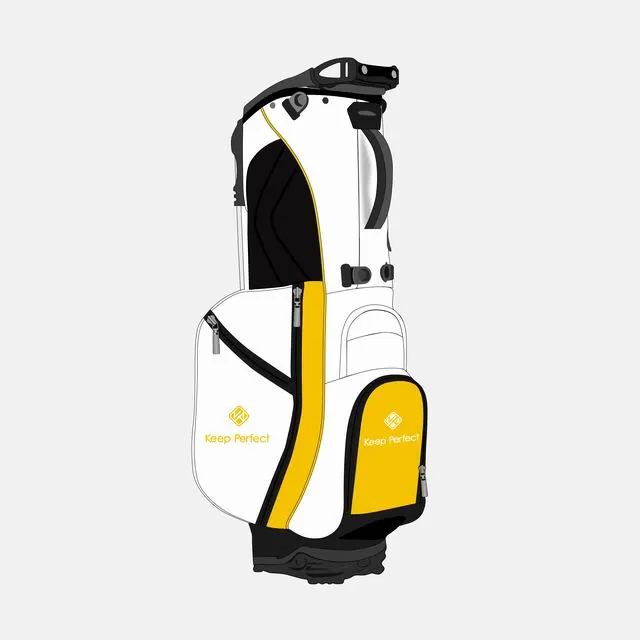
To adjust a carry golf bag properly, work in this order: empty and balance the pockets so weight sits close to your spine; set each shoulder strap so the bag rides high and snug against your back rather than low and swinging; fasten and tune the sternum strap; then test with the bag loaded and make one small strap change at a time until walking 18 holes feels light and stable. Most carrying discomfort is a fit problem, not a bag problem — an adjustable carry or stand bag, tuned to your torso, walks well even when it is not the lightest in the range. The order matters more than the force of the pull: balance first, straps second, chest strap third, then small repeated adjustments as you walk.
A golf bag never carried feels like a trivial thing, but the person who walks with it 8,000 steps a round will tell you a badly adjusted harness is a day-ruining constant. The good news is that most bags have enough adjustability to fit well; the adjustment simply never gets done deliberately. This guide gives a repeatable, step-by-step method you can finish in the car park in under ten minutes, so the carry is something you set once and forget about for the whole season.
Why Adjustment Matters More Than Light Weight
A cheap bag adjusted perfectly carries better than a premium bag adjusted badly. Fitters describe "effective weight" as the load the body actually feels on the shoulders and spine, and good strap geometry can cut it noticeably even at the same raw weight. When the shoulder straps pull down on the edge of the shoulder, the back muscles fight the load all day; when the same load sits close to the spine at the right height, the core carries it passively. So before you spend on a lighter bag, spend ten minutes on the fit — it buys the biggest comfort improvement for nothing.
Effective weight also explains why two people can carry the same bag differently: the fitting numbers are personal, which is exactly why a fixed, one-size harness fails so many players and why an adjustable system is worth having. The wider case for ergonomic bag components is laid out in the ergonomic golf bag design guide, but the practical takeaway here is that adjustability is the feature that turns a good bag into a fit one.
The Four Controls on a Modern Carry Bag
A modern carry or stand bag gives you four independent controls, and it helps to name them before you touch anything. The two shoulder straps are the main load-bearers; the sternum (chest) strap holds the two together across your chest; the hip belt (on some models) transfers load to the hips; and the leg/stand mechanism is about where the bag rests, not how it carries. Adjust them in that order for the cleanest result: shoulders first, then the sternum strap, ignoring the hip belt unless your bag has one, and only then thinking about the stand.
Most players adjust only the length of the shoulder straps and never touch the rest, which is why their bags still swing or slide. Understanding that all four controls do different jobs lets you fix the specific symptom instead of guessing — a bag that sways on the shoulders needs the sternum strap, not shorter shoulder straps; a bag that slides down needs higher shoulder straps, not a tighter sternum strap.
Step One: Balance the Bag Before You Adjust Anything
Start by emptying the bag, then decide the permanent load and balance it deliberately. Even a great harness cannot fix a bag that teeters because everything heavy is in one pocket. The ideal distribution is: heavy, hard items (rangefinder, water, a heavy rain layer) low and central, close to the spine; soft, light items high in the access pocket; and valuables in a small chest-adjacent pocket. Put the heaviest items into the pockets nearest your back when carried, so the centre of gravity sits close to the spine rather than out in front of you.
Then — and here is the step most people skip — carry the bag as it will be carried and feel whether one shoulder takes more than the other. An adjustable dual-strap bag lets you even that out, but you cannot even it out until the permanent load is in place. Balance the pocket load first with the empty-bag test, and only then move to the straps; otherwise you are tuning a moving target. The relationship between load balance and strap tune is exactly what the golf bag sizing and fit guide treats in the fitting chapter.
Step Two: Set Each Shoulder Strap to the Right Length
| Step | What to do | Look for |
|---|---|---|
| 1. | Loosen both straps; hold the bag lightly | Bag tension-free, straps slack |
| 2. | Put on both straps like a backpack | Straps sit on shoulders, not neck |
| 3. | Tighten the left and right straps alternately | Bag rises toward upper back |
| 4. | Check equal tension on both shoulders | No one-sided drop or sway |
| 5. | Tighten the sternum strap | Straps held centrally, load stable |
The shoulder straps determine the height of the ride. Buckle both straps, then snug the left and right straps alternately until the bag rides up on your back — the correct carry places the load high and close against the upper-to-mid back, so the mass sits over your centre of gravity instead of dragging low behind and below your shoulders. You should be able to hook a thumb under the strap near your shoulder without much slack; if the strap is loose enough to slide forward, the bag will swing with every stride.
Alternate left and right as you tighten because a dual-strap bag shares load, and tightening one side completely before the other makes the bag lopsided. When you have adjusted a strap once, walk a couple of strides and re-check. The correct feel is the bag moving almost as one with your torso, not lagging behind it.
Step Three: Tune the Sternum (Chest) Strap
The sternum strap does not carry load — it holds the two shoulder straps in position so they do not slide off the outside of your shoulders and so the bag does not sway side to side as you walk. Clip it across your upper chest, just below the collarbones, and adjust so the straps sit comfortably with light tension. Too high and it can press against your throat on a full swing; too loose and it does nothing at all. The right setting lets you swing freely while keeping both straps anchored over the shoulder joints.
The sternum strap is the single most common fix for a bag that "never sits right but I do not know why" — the shoulder straps are set, the bag is balanced, yet it still slides and swings. That symptom is the chest strap not holding the harness together. Set it with intention and the whole assembly stabilises, whether you are walking a hilly course or charging, club in hand, between shots.
Step Four: Work With the Hip Strap if Your Bag Has One
Higher-end carry bags add a hip or waist strap that pulls some of the load from the shoulders onto the hips, the same trick backpackers use to handle distance. If your bag has one, buckle it after the shoulder and sternum straps are set, and tighten gently so it transfers a comfortable share of the weight without pinching or restricting your stride. A hip strap is a distance tool: on a short 9-hole walk it is optional, but on a 5-hour round over hilly terrain it keeps the shoulders fresher.
Do not over-tighten the hip strap — it should settle the load, not lock your pelvis, or it will fight your walk and fatigue the lower back. Tune it at about 70 percent of the cradle you might use on a loaded backpack, then adjust over a couple of rounds until it feels like it disappears into your stride.

How the Stand and Rest Angle Fit the Whole Picture
The leg/stand mechanism does not belong to the harness, but it shapes the carry habit more than players expect. A good stand bag opens its legs with the weight of the bag on the ground and stays upright on its own, which means you never lean it against a cart or a wall. Check that the legs deploy freely and that the bag rests upright with the clubs lightly cradled — a bag that tips forward pulls clubs out, and one that tips back makes you reach for every club. The rest angle is a fit matter too: it determines whether you pick the bag up from a comfortable position rather than an awkward bend.
A correctly resting stand bag also means you set it down and pick it up repeatedly through the round, which is where a mis-adjusted harness shows up as constant readjusting. If you find yourself yanking the straps tight mid-round, the stand angle and the harness are fighting each other — fix the stand first, then re-verify the four controls. When the bag rests level and carries level, setting it down and picking it up become automatic, which quietly saves energy over 18 holes.
Adjusting for Layers, Weather and the Long Walk
Your carry fit changes with what you wear, which most players miss. A bulky base layer or a rain jacket changes how the straps sit across your shoulders and how much strap length you need, so re-check the fit when the weather turns, and re-tune between the summer layers and the winter mid-layer. Carrying a bag over an extra 500 g of clothing is uncomfortable not because of the weight but because the straps are now sitting at the wrong geometry for your thicker torso.
The right habit is a five-second check at the first tee each time your layering changes: one step, one look at where the straps sit, one small tug on each. Across a season the cumulative effect of keeping the harness tuned to your current layers reduces fatigue and lowers the chance of a shoulder niggle you would otherwise blame on the bag. Comfort in the carry is adjusted layer by layer, not once and forgotten.
Small Repeated Adjustments Beat One Big One
The single most important discipline in bag adjustment is to change one strap by a small amount and walk before changing anything else. A big simultaneous change to all four controls does not let you attribute the improvement, so you cannot learn what your body likes. Make one small adjustment, walk ten strides, feel the difference, and repeat. Over two or three rounds the bag migrates into the exact setting your shoulders and stride want, in a way a one-shot "car-park tune" never achieves.
This is also the honest limit of any written guide: the perfect setting is the one your body settles into with experience, not the one a spec sheet prescribes. The adjustable range exists precisely to let you find it, and finding it is a small, iterative conversation between you and the bag rather than a one-time set-up. By the end of the first season you will carry without ever thinking about the straps, which is the real sign of a tuned fit.
When a Tuned Bag Still Means a Different Bag
If you have balanced the load, set the shoulders, tuned the sternum strap, checked the stand, and the bag still digs in, slides, or sways, the problem is likely the base geometry, not the adjustment. A harness and torso simply do not match, the straps are too far apart or too close for your frame, or the bag is simply too heavy for its harness for your body to carry comfortably. At that point the honest answer is a different bag — a better-fitting model or a lighter one — not more strap-futzing.
Take the lesson from the adjustment to the next purchase: try a bag loaded with your own clubs, not empty, walk with it, and judge the harness against your torso rather than the colourway. The fit discipline you have now learned makes the choice easier, because you know precisely which numbers and feelings matter. The carry-versus-ride decision and its trade-offs are covered in the walking versus riding guide, which helps you decide whether a carry bag is even the right category before you tune it.
Factory Perspective: Adjustability Built to Last
On the manufacturing side, the reason some bags adjust and stay adjusted while others slip is the hardware and the strap routing, not the labelling. Durable metal or reinforced buckles, webbing that holds its tension through thousands of uses, and strap anchor points positioned for good geometry are what make an adjustable harness dependable. A bag that is nominally adjustable but built with flimsy buckles will unfold itself mid-round, which is exactly why fit and build quality travel together.
Our affiliated 4,950 m² factory, producing golf equipment since 2004 and established as a company in 2014, runs seven production lines, 126 sewing machines and 137 staff, making 200,000 bags a month for 200+ brands across 100+ countries, and passed an SGS audit in March 2026. It tests strap and buckle durability as part of its QA, with sampling in 10-20 days and production in 45-60 days at a 200-piece MOQ (100 for test orders). For retailers, the practical requirement is a harness that survives the whole season and keeps its adjustment — the brief behind the stand bag versus cart bag decision and any private-label carry line.
Read the Symptoms: Quick Fit Troubleshooting
When something feels wrong, read the symptom and fix the cause rather than re-tighten everything. A bag that sways or rocks as you walk is a sternum-strap problem — hold the harness together. A bag that digs into one shoulder means the straps are uneven or the load is unbalanced to one side. A bag that sits too low and drags needs shorter shoulder straps so it rides higher. A bag that pulls your shirt collar or brushes your neck has its straps sitting too far in — spread them over the shoulders. A bag that makes your shoulders burn early is often one you are effectively carrying with your traps because the sternum strap is missing, resting the load on the wrong muscles. Name the symptom, make the single small change that targets it, and walk to verify.
If you fix the symptoms and the discomfort returns every round at the same point, the load is travelling poorly even when the straps look right. That is the moment to rebalance the pockets and, if nothing changes, to reconsider the base geometry rather than tolerate a bad carry. Troubleshooting turns bag fit from guesswork into a short list of cause-and-effect fixes you can retrace in the car park in minutes.
Conclusion
Adjusting a carry golf bag well is a ten-minute, four-control method: balance the pocket load so the weight sits close to the spine, set the shoulder straps so the bag rides high and snug, tune the sternum strap so the harness holds together, and only then consider a hip strap or the stand. Make each change small and test by walking, re-check the fit whenever your layering changes, and let a tuned bag reveal whether the problem was adjustment or the base geometry. Do that and the right carry bag disappears into your round — carrying comfortably is an adjustment you set, not a stroke of luck.
Sources
Frequently Asked Questions
- How tight should my golf bag shoulder straps be?
- Tighten until the bag rides high and snug against your upper back, close to your spine. You should be able to hook a thumb under the strap without much slack, and the bag should move with your torso rather than swinging.
- Why does my golf bag keep sliding off my shoulder?
- Usually the sternum (chest) strap is missing or too loose, or the shoulder straps are too long. Tighten the chest strap to hold the two shoulder straps together; if it still slides, lift the shoulder straps so the bag sits higher.
- Should I tighten both shoulder straps equally?
- Yes. Tighten them alternately so the load is shared evenly. Tightening one side fully first makes the bag lopsided and one shoulder take most of the weight.
- How do I stop my carry bag from swaying when I walk?
- Set the shoulder straps for height first, then firm up the sternum strap so it holds the harness centrally. Sway is a sternum-strap symptom, not a shoulder-strap one.
- Can I adjust a non-adjustable bag?
- Only within its existing buckles. If a bag lacks an adjustable sternum strap or single-strap geometry, a proper fit may be impossible — which is a signal to choose a bag with the right adjustability for your frame.
- How often should I re-adjust my bag?
- Re-check each time your layering changes (summer to winter, rain jacket), after changing what you carry, and at the start of a season. Small tune-ups over a few rounds find the setting that disappears into your stride.
- What do the numbers mean when I buy?
- Look for adjustable, durable straps and good geometry over the lightest label: a well-adjusted slightly heavier bag carries better than an unadjustable featherweight. Try a bag loaded with your own clubs, not empty.
- Is it better to buy a lighter bag than to adjust well?
- Cheap adjusted beats premium unadjusted, so fix the fit first. Only if a tuned bag still digs in, slides or sways is the base geometry or weight the real problem — then change the bag.