Golf Ice Bag Size Guide for Personal and Group Use
The right golf ice bag size comes down to who carries it: a compact 5-8 liter personal bag suits a single player and roughly 6-10 cans, while a 13-18 liter mid-size works for most foursomes at 15-24 cans, and a 20-24 liter bag is the go-to for full groups and longer rounds. Capacity, cart-mounting profile and weight all follow from that one decision about personal versus shared use. This guide maps cooler sizes to real course routines—walking, riding, couple days and foursome afternoons—so you stop guessing and pick the volume that fits your game, then provides the specifications to brief a factory when you want a custom version.
Getting the size wrong is the most common reason an ice bag disappoints. Too small and you run out of drinks by the back nine; too large and it is awkward to mount on a cart or heavy to carry. The good news is that golf cooler bags cluster into a few dependable size brackets, and this guide walks through each one with the numbers to match.
Why Capacity Is the Starting Point
Everything else—shape, pockets, straps, cart fit—hangs off how many cans, bottles and how much ice you actually need. Golfers have different routines: some want a single chilled water for three hours, others keep the whole foursome supplied. Start by counting what you genuinely carry, add a little ice, and let that number pick your capacity bracket.
A useful shorthand is roughly 400 milliliters per can, plus space for ice. A 6-8 liter personal bag therefore sits comfortably with six to ten cans; a 13-18 liter standard bag covers a foursome's casual share; and a 20-24 liter bag handles a full group or a long, hot day with ice reserves. Keep this can-count logic in mind when you compare bags, because marketing volumes do not always translate directly to practical use.
Personal Bags: The Solo Player's Companion
For a single player, a 5-8 liter bag is the sweet spot. It holds a personal supply, fits neatly on a ride cart or a push cart, and is light enough to carry without slowing you down. Personal bags typically have one main zip compartment, a small side pocket for keys and phone, and a shoulder or hand strap.
The key personal-bag features are compactness and easy access.
 Because you will open it repeatedly for water on a hot round, a bag with a short, wide neck and a smooth zipper beats a tall, narrow tube. Many players also like a bottle-securing pocket so a refillable bottle stays upright and accessible rather than rolling around.
Couple and Short-Group Sizes
When two players share, a 9-12 liter bag bridges personal and group sizing. It holds roughly 10-15 cans, covers a couple's round or a short outing for three, and still mounts easily. This is also a popular gift size for corporate events because it is generous without feeling oversized.
At this capacity, two pockets start to make sense: one insulated main compartment and at least one organized pocket for small items. A comfortable grip handle plus a cart strap gives flexibility whether the couple rides or walks with a push cart.
Group Bags: Feeding the Foursome
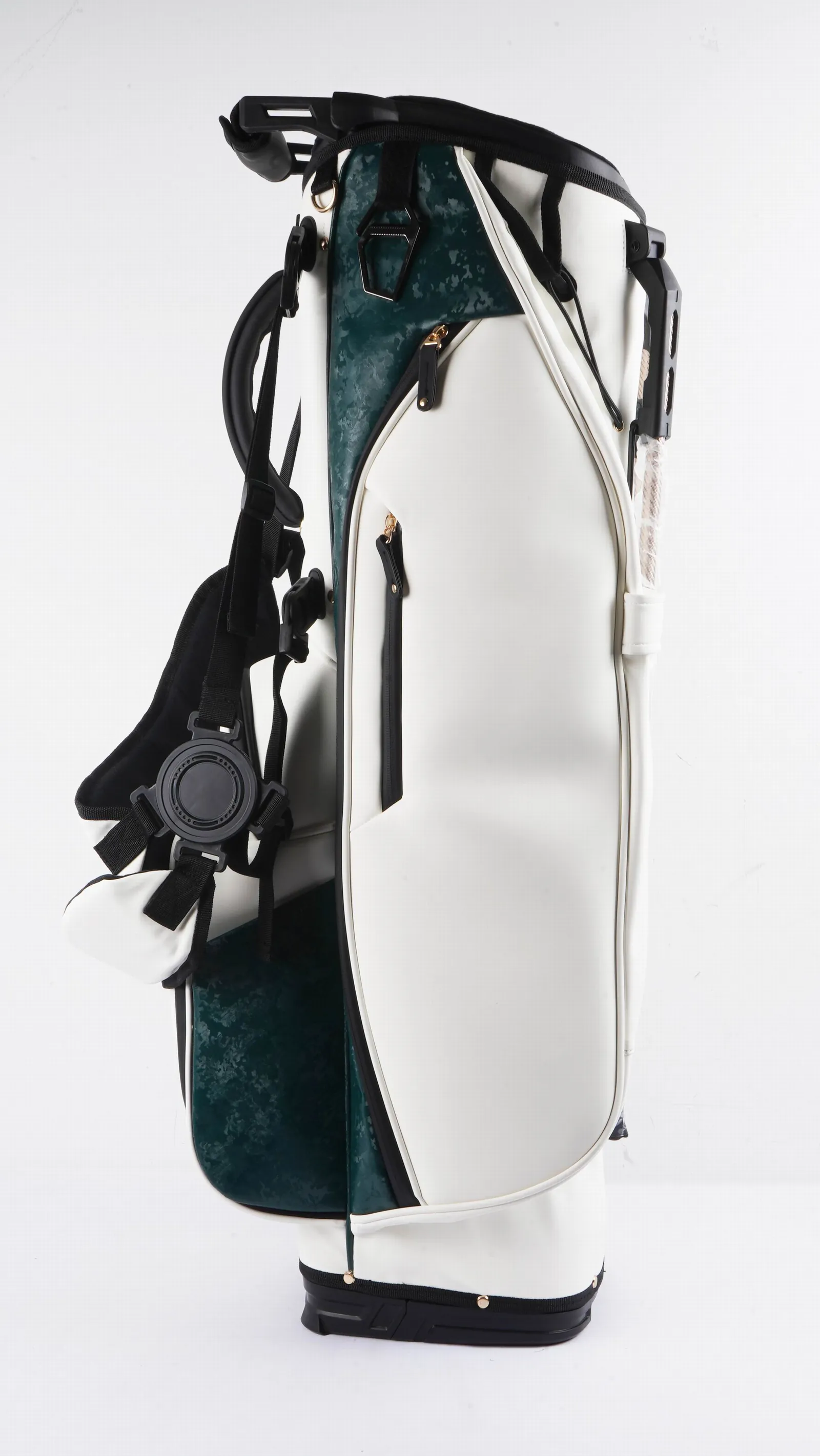
For the most common social pattern—a foursome sharing drinks—a 13-18 liter bag is the everyday answer. It carries roughly 15-24 cans or a mix of bottles and ice, is stable on a cart, and keeps the group hydrated through a full eighteen holes. Because four people split the load, weight is less of a constraint than it is for a solo bag.
A group bag should be built for sharing: wide mouth for easy access, a stable flat base that does not tip on a cart, water-blocking zippers and a leakproof liner that shrugs off a melting ice pile. Two side pockets keep cups and pool items within reach, and a secure valuables pocket protects phones and wallets while the group moves around the course.
When a group shares one bag, hygiene matters too. A leakproof, wipe-clean liner and an anti-slip base keep the party moving safely between stations, and handles that stay clear of melty condensation make it pleasant to carry when the bag returns to the cart after a long stop.
Large Group and Long-Day Capacity
Some days call for a bigger commitment. A 20-24 liter bag suits full groups, long stretches of social play, or a day that starts on the course and ends at a gathering spot. It carries 25-30 cans plus ice and pairs with a cart-mounted design because it is too heavy and awkward to carry all round.
At this size, engineering matters more than marketing. The base must be reinforced against the weight of a full load, the handles should distribute the load comfortably, and the insulation needs the thickness to protect that much volume for the full day. If you are ordering several of these for a tournament or a rental fleet, confirm the straps and base hardware match the carts the guests will use, because a bag that slips on a sharp turn is both a nuisance and a safety risk on the course. If you are ordering several of these for an event or a fleet, confirm the cart straps and base durability with the factory before committing.
For course or club resale, stocking the personal, standard and group sizes as a set covers every kind of guest, from a single golfer to a foursome, and makes the cooler category easy to merchandise in one display.
Spec Table: Matching Capacity to Use
The table below summarizes ideal capacities by scenario so you can pick the volume with confidence.
| Capacity (liters) | Cans (approx.) | Best For | Cart Mount | Typical Build |
|---|---|---|---|---|
| 5-8 L | 6-10 | Personal, walking rounds | Small strap | Single zip + one pocket |
| 9-12 L | 10-15 | Couple / short group | Cart or carry | Main + side pockets |
| 13-18 L | 15-24 | Standard foursome share | Cart mount | Main + two side pockets |
| 19-24 L | 25-30 | Full group, longer rounds | Cart mount | Main + side + valuables |
These bracket ranges are starting points; a factory can tune pockets, insulation and mounting to your exact preference once the volume bracket is chosen.
How Shape and Insulation Interact With Size
Size is not the only variable. A bag's shape decides how quickly warm air enters, and its insulation decides how slowly warmth gets through. Short, wide bags with a narrow-opening mouth retain cold better than tall, narrow cylinders, because every zip-open cycle exchanges less air. Choose a shape to match the volume, then choose insulation thickness to the retention you need.
A 12-15 mm PE foam core is a stable default for most sizes, delivering the commonly expected 4-6 hours. Budget-priced bags sometimes drop to 8-10 mm foam and shorter retention, while hotter climates or full-day events warrant a 15-20 mm upgrade. Always confirm the liner is leakproof, because a bag that leaks under the weight of a full cooler will frustrate golfers far more than a slightly smaller capacity would.
Cart Mounting and Weight by Size
How the bag lives on a cart depends on size. Personal bags strap easily anywhere; mid-size bags ride well on the passenger-side frame; large bags need a stable base and secure mounting so they do not swing into your clubs or your line. Walking golfers who push a trolley should keep the bag light enough to lift on and off repeatedly.
Even large group bags should not feel punishing to move between parking lot and tee. Look for carry handles that sit at a balanced point, and for a compression or strap system that keeps the load stable in transit. If you buy a custom fleet for an event, confirm the mounting hardware matches the cart fleet the guests will use.
Weight distribution is just as important as attachment. A full group bag should sit low and square so it does not rock when the cart brakes, and the base should be wide enough to stay put on uneven terrain.
Think about grab points, too. Between the parking lot, the clubhouse and the first tee, everyone will lift the bag at least a few times, so a handle that feels natural at chest height and does not dig into the palm makes a large bag feel far smaller. Test these ergonomics on the sample before you approve a whole fleet.
These details are easy to miss on paper but immediately noticeable in real use.Choosing the Right Bag for Your Routine
- Carry-walk solo: choose a light 5-8 liter bag you can lift all round.
- Ride with a friend: a 9-12 liter bag balances capacity and cart fit.
- Foursome sharing: the 13-18 liter group size is the daily workhorse.
- Long day or big group: go 20-24 liters with a reinforced cart-mounted base.
- Retail or pro-shop: stock all three sizes so guests find their fit immediately.
Once you know the bracket, resist the temptation to overbuy. A bag that is too big becomes a chore to carry and does not look right on a cart; a bag that is too small disappoints four holes in. Matching the volume to the routine is what makes the bag genuinely useful rather than just decorative.
Custom Sizing and Ordering From a Factory
If you want a custom cooler bag, you can order any of these volume brackets with your own logos, colors, insulation and pocket layout. At our factory the standard starting MOQ is 200 units, with a 100-unit test tier, and a full order completes in 10-20 days of sampling plus 45-60 days of bulk production. Capacity and cart-mounting features are fully customizable to the fleet or routine you serve.
Before briefing the factory, pin down the target environment: personal or group, cart or carry, hot or mild climate. That single set of answers lets the factory recommend the right volume, foam thickness, liner and strap hardware, and set a per-unit price that matches the build.
Pocket and Organization Tips per Size
Organization scales with size. A small personal bag needs just one pocket for essentials; a group bag benefits from two or three pockets plus a zippered valuables pocket. Keep the most-used items in open, accessible pockets and reserve sealed compartments for phones and wallets, which are the parts of a golf trip that should never get damp or lost in a group scrum.
A helpful rule of thumb is to keep the bag balanced for its size: right-sized pockets, easy-to-open zips and a strap that returns the weight where it belongs. A bag pleasant to open and close twenty times a round earns far more loyalty than one ingeniously engineered but awkward in daily use.
At group sizes, a mesh or drainage pocket is valuable for wet can rings and condensation, and a named or loop-tag patch helps players identify their bag in a group setting. These small design choices turn a generic cooler into a tailored piece of kit that golfers reach for without thinking.
Maintenance and Longevity Across Sizes
Think of the cooler bag as an investment in comfort that pays off every warm round. The right size keeps you hydrated and happy from the first tee to the clubhouse, while the right habits keep that size feeling effortless for years. Good sizing, honest retention and routine care together make a cooler bag one of the most reliable pieces of kit in the bag. So before you buy blind, picture your next few rounds, count your needs honestly, and pick the bracket that matches the way you actually play.
Regardless of size, a cooler bag lasts longer with basic care: rinse the liner after a day with sweat and condensation, dry it fully before storing so mold does not take hold, and store it partially open to keep the lining dry. Check zippers periodically and reseal any seams that start to pull under a heavy load, because a small leak left alone grows into a bigger problem.
Store the bag with the zipper partially open so the lining breathes, and never fold a wet liner tightly because trapped moisture is what most often shortens a cooler bag's life. A little care between rounds keeps the foam springy and the liner seal intact for many seasons. The habit is worth far more than the effort, and it keeps every size of cooler bag ready for whatever the course throws at it.
For golf courses and clubs that keep a rental or resale fleet, a simple rotation and cleaning schedule protects the investment. Inspect the fleet for foam softening, liner tears and zipper failure as part of routine maintenance, and budget to refresh worn units regularly so guests never receive a bag that disappoints. A small annual refresh of the most-used sizes keeps the course looking professional and every guest fully equipped on arrival.
Encourage users to keep the bag out of direct sun when stored, because UV degrades outer fabrics and foam over time even when the bag is not in use. A quick wipe of the zipper tracks and a check of the strap stitching twice a season prevents the small annoyances that quietly shorten a cooler bag's enjoyable life.
Climate and Season Considerations That Change Sizing
Where and when you play should adjust your default size more than most people expect. In hot, humid summer conditions, golfers go through more fluids and lean toward a larger bag so nobody runs dry on the back nine. In mild seasons, a personal bag may be all you need, and the smaller footprint is easier to carry between holes.
Humidity also affects cold retention: damp, warm air carries heat into the bag faster than dry air, so a long hot day argues for thicker insulation even at the same capacity. Match the size to the weather you actually face, and treat the insulation thickness as an independent decision from capacity. A keen golfer in a hot climate often prefers a sturdy 13-18 liter bag over a bigger, thinner bag that lets warmth rush in.
Tournament and event planners should also weight the forecast. A mid-summer fund-raiser in direct sun will put far more strain on a fleet of group bags than a cool-season member round, so confirm the insulation and leakproofing hold up at the volume guests will actually pack.
Pair your cooler with the right golf cart bags and course accessories to complete the setup, keeping clubs, drinks and small gear organized on the same cart without clutter.
Briefing a Custom Size Now?
Tell us personal or group use, target capacity and cart type and we will return a spec sheet with insulation, pockets and mounting options, plus a sample and bulk timeline. We support golfers, clubs and brands around the world.
Get Size and Spec Help →Frequently Asked Questions
- What is the standard size of a personal golf ice bag?
- A personal golf ice bag commonly holds 5-8 liters, roughly 6-10 cans, with a single zip compartment and one or two small pockets. This size fits a ride or push cart, keeps a player's own drinks cold for several hours, and is light enough to carry from the parking lot to the first tee without strain.
- What size cooler bag do you need for a foursome?
- For a foursome sharing drinks through a round, a 16-24 liter bag is a sensible choice. That volume carries roughly 20-30 cans or a mix of bottles and ice while still mounting on a cart. Four players sharing a bag also split the weight, so a larger capacity is more practical than it first appears.
- Should a cooler bag mount on a cart or be carried?
- If you ride, prioritize a cart-mounting profile with a stable base and a strap system that secures to the cart frame. If you walk with a push cart or carry, prioritize a lighter bag with a comfortable strap. Many golfers keep one small personal bag for walking and a larger one for group days.
- Does a taller or wider ice bag retain cold better?
- Shape affects performance more than raw dimensions. A bag with a short neck and wide body slows warm-air exchange better than a tall, narrow tube, because opening a wide mouth admits more air. Match the volume to how much you carry instead of chasing the tallest bag.
- How many cans fit in common cooler bag volumes?
- As a rough guide, a 6-8 liter bag holds about 6-10 cans, a 12-18 liter bag holds about 15-24 cans, and a 20-24 liter bag holds about 25-30 cans before adding ice. Adding ice reduces the practical can capacity, so plan with ice in mind.
- What size bag is right for a golf course or club resale?
- For pro-shop or course resale, carry at least three sizes: a 6-8 liter personal bag, a 12-18 liter standard and a 20-24 liter group size. This breadth covers singles, couples, foursomes and junior players, and it gives the retailer a fuller cooler merchandising set.
- Does a larger cooler hold cold longer?
- Not automatically. A larger, loosely packed cooler contains more air that warms and often cools contents less efficiently than a smaller bag packed tightly with cold items. Match size to your real load and pack it full with pre-chilled contents and ice to get the best retention for the biggest bag you actually need.
Selecting a golf ice bag size is a back-to-front exercise: decide who carries it, count what you need, and let capacity drive the build. From a 5-8 liter personal bag to a 20-24 liter group hauler, the dependable size brackets in this guide give you a clear starting point, and a factory can customize any of them for your brand and routine.
Explore the full lineup and insulated options via our golf cooler bags range and insulated cooler options, see how they fit a wider catalog in the golf bag types guide, or reach the team at service@junyuanbags.com or +86 17750020688.