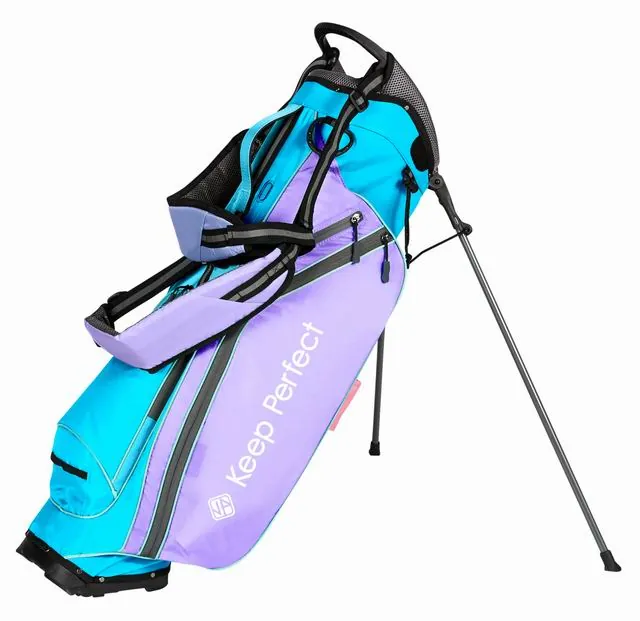
The global golf bag market is on a clear growth path: independent research firms place it at roughly USD 1.25 billion in 2025, with forecasts ranging from USD 3.1 billion to USD 3.2 billion-plus by the early 2030s (Grand View Research, Mordor Intelligence), while The R&A reports 112.2 million people now play golf across all formats outside North America. That widening participation base — especially among juniors, women and off-course/simulator players — directly feeds demand for lightweight stand bags, color-forward cart bags and travel-ready Sunday bags. As an OEM/ODM golf bag manufacturer shipping to more than 100 countries for 200+ brands, we build the exact categories buyers now reorder, and this guide breaks down where demand is heading, how consumer behavior is shifting, and how wholesale buyers should plan custom programs around proven market signals.
Before diving into trends, it is worth grounding the conversation in numbers. Because our readers plan inventories and multi-year programs rather than single purchases, understanding the direction and magnitude of market movement matters more than any single forecast. This article synthesizes publicly published market research from Grand View Research, Mordor Intelligence, The R&A and the AGIC golf-tourism study, and maps those findings to concrete bag categories, consumer behaviors and sourcing decisions a factory buyer can act on this season.
Global Golf Bag Market Size and Growth Outlook
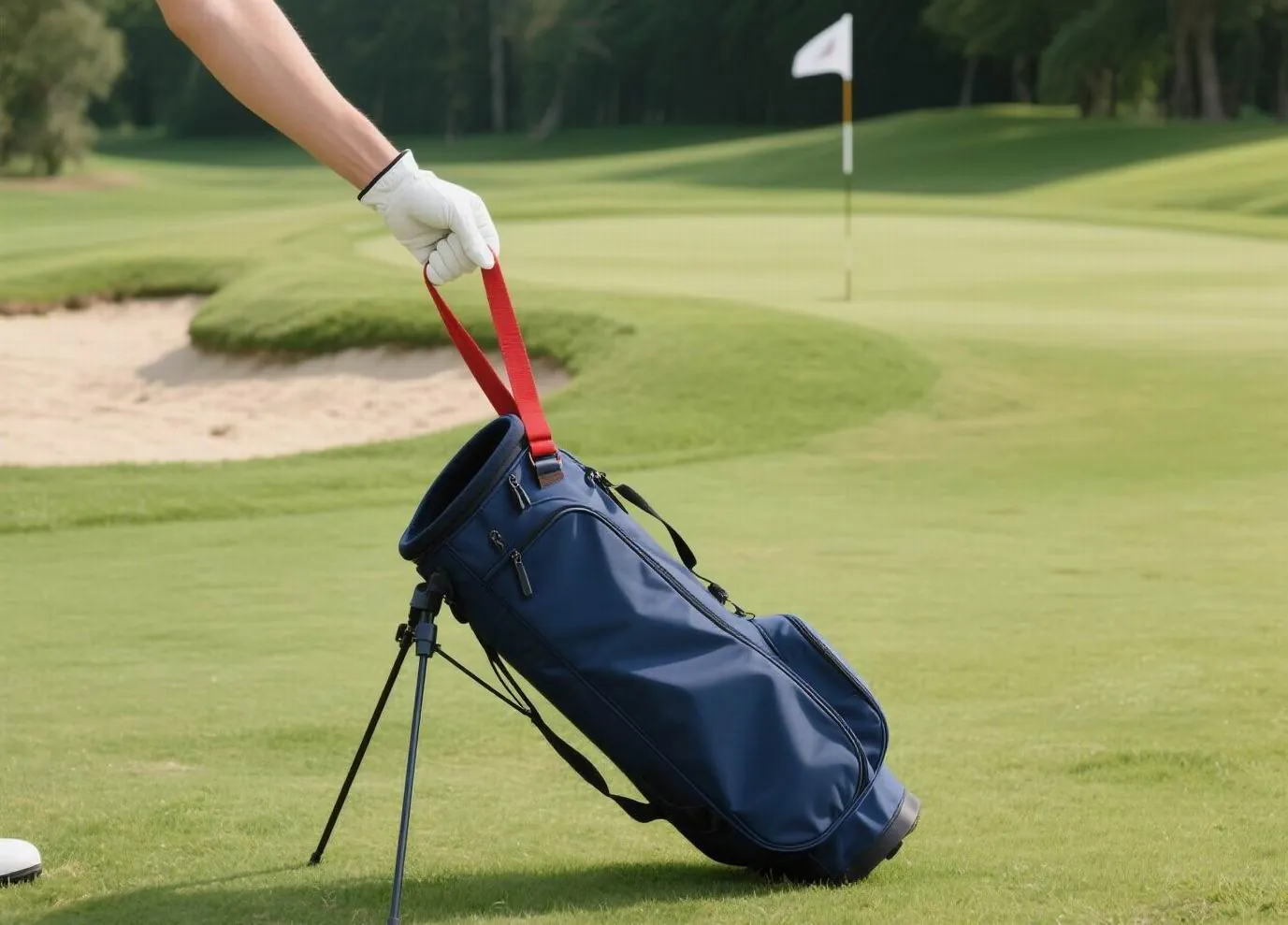
Multiple research houses now publish golf bag market data, and while their baselines differ slightly, the direction is consistent: sustained single-digit-to-mid-teens growth in value terms through 2030. Grand View Research estimated the golf bags market at approximately USD 1.24 billion in 2023 and projected it could reach around USD 2.32 billion by 2030, a compound annual growth rate (CAGR) of about 9.5% across that window. Mordor Intelligence pegs the market at roughly USD 1.25 billion in 2025 and forecasts USD 1.66 billion by 2031 at a more conservative CAGR near 4.85%. Verified Market Reports similarly puts the segment between roughly USD 1.6 billion and USD 2.4 billion across the mid-2020s.
The variance between forecasts is normal — different firms use different baselines, product definitions and regional weighting. The practical takeaway for a buyer is not the exact dollar figure but the structural growth story: participation is climbing globally, average households increasingly own more than one bag, and premium plus travel-adjacent segments are growing faster than the market average. When you layer these views with The R&A's participation data, it is easy to see why stand bags, cart bags and travel covers are the three categories wholesale programs should prioritize.
Participation Data: The Real Demand Driver
The most reliable leading indicator for bag demand is golfer participation, and here the evidence is unambiguous. The R&A's Global Golf Participation Report counted 112.2 million adults and juniors playing golf across all formats in its affiliated markets (excluding the USA and Mexico) by 2025 — up 4.2 million year-on-year and a jump of roughly 3 million versus 2024's 108 million. On-course (9- and 18-hole) golfers reached approximately 43.9 million, while off-course formats — simulators, driving ranges and adventure golf — now engage an even larger cohort of 68.3 million participants.
Participation is not background noise for bag demand; it is the single most reliable forecasting variable. Because investment in golf has grown and the ways people play are expanding — from full rounds to simulators, ranges and short courses — the pool of people who need a bag, or a second bag, keeps widening. Tracking how that pool is distributed across junior, casual, committed and off-course players tells you where the next multi-thousand-unit order is most likely to come from.
Several participation details have outsized consequences for bag manufacturers. First, junior participation reached 47.1 million, up 6% in a single year, which directly fuels demand for smaller, lighter and color-forward junior and youth bags. Second, women now account for roughly a third of total adult participation in The R&A's nine biggest markets, and up to 53% of adult participants choosing alternative formats — a structural shift that raises demand for women-specific geometry, weight distribution and styling. Third, off-course and simulator play is expanding the base of first-time bag buyers who may never need a tour-grade staff bag but absolutely need a versatile carry or cart option.
Category-Level Shifts: Stand, Cart, Travel and Sunday Bags
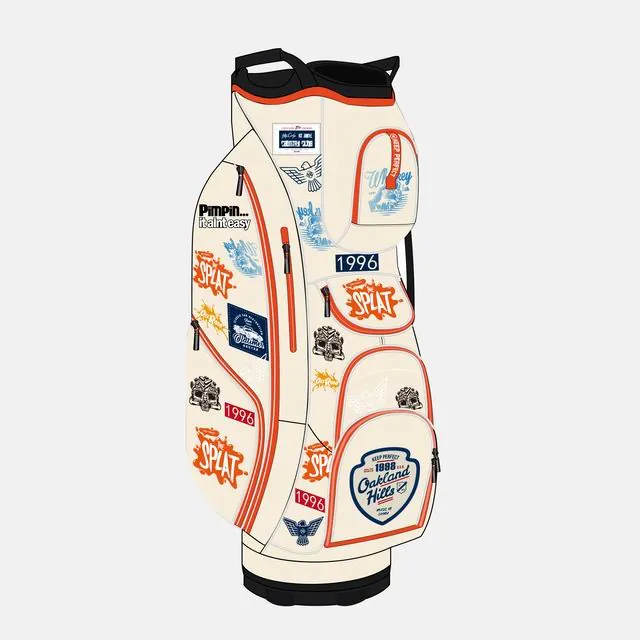
Market research that segments by product type gives the clearest ordering of where demand sits. Mordor Intelligence reports stand bags held the largest share at roughly 40% of market value in 2025, reflecting the global preference among recreational and walking golfers for portability and comfort. Cart or trolley bags represent the second anchor, and Mordor projects them to expand at a CAGR of roughly 5.9% through 2031 as cart-based play and push-cart use continue to rise. Tour bags, travel bags and pencil/Sunday bags round out the mix, with premium models growing faster than the mass segment.
Stand and carry bags lead because they serve the broadest slice of players, but the action over the last several years has concentrated in two places: lightweight walkers for the walking and junior surge, and versatile travel and Sunday formats for a booming travel-tourism segment. A buyer who balances an anchor stand-bag line with a second, faster-moving category hedges against any single-format plateau.
For a wholesale brand, the strategic reading is simple: build an assortment that spans these four demand poles rather than betting on a single silhouette. A core cart-bag line with a stand-bag extension and a travel-cover/Sunday-bag add-on captures nearly every demand swing identified in the data — including the growing cohort of golfers who buy separate bags for travel versus daily play.
| Bag Category | Primary Demand Driver | Growth Signal | Sourcing Angle |
|---|---|---|---|
| Stand / carry bags | Walking golfers, juniors, women | ~40% of market value, portability-led | Light frames, dual-strap ergonomics |
| Cart / trolley bags | Cart-based play, push-carts | ~5.9% CAGR projected to 2031 | 14-way dividers, stable footprint |
| Tour / staff bags | Tour players, academies, branding | Premium, prestige-led | Oversized branding panels |
| Travel / Sunday bags | Golf tourism, casual, simulators | Travel spending rose to $31B (AGIC) | Compact, packable, protective |
Consumer Preferences Reshaping Bag Design
Behind the category data are four recurring consumer expectations that now shape nearly every brief we receive. Weight ranks first. Golfers who walk the course increasingly reject anything approaching a heavy carry load, so the industry has converged on sub-five-pound stand bags and feather-light Sunday bags. Organization comes second: 14-way full-length dividers and larger apparel pockets have moved from premium extras to near-standard expectations. Weather resistance is third: waterproof or water-resistant construction is now expected rather than a discretionary upgrade in cart and stand bags. Brandable real estate is fourth: clubs, academies and corporate programs buy based on how prominently a logo or embroidery can be displayed.
Price no longer dominates every decision: modern golfers routinely trade up to better organization, lighter weight and weather security. Yet value still anchors the mass market, so the winning product brief balances build quality that justifies a step-up price with features buyers can see and compare — dividers, pocket count, base stability and tagging that translates into search rankings and shopping decisions.
These preferences overlap. A club ordering branded stand bags wants all four: light enough for members to carry, organized enough to protect clubs, tough enough for changeable weather, and with a clean branding panel. The factories that deliver on this combination in a single SKU are the ones that earn reorders — which is why we design our custom programs to hit all four expectations simultaneously rather than optimizing one at the expense of others.
The Rise of Off-Course and Simulator Golf
One of the most consequential shifts in consumer behavior is the growth of off-course and simulator golf. The R&A estimates that 68.3 million adults and juniors now engage with golf through alternative formats — more than the on-course cohort. Simulators at commercial venues, driving ranges with automatic ball-tracking and short-format courses have pulled in players who may never have bought a full traditional bag. Yet these same players do buy equipment: range bags, pencil bags, compact carry options and branded accessories that travel from venue to venue.
For manufacturers this is a genuine expansion of the addressable market. A gamer who plays in a simulator league may own a different, lighter bag than a traditional course golfer — and may replace it more often. Designing products that feel at home in a lounge, a media room or a casual par-3 course widens pool, and it is an underserved niche most Western-focused lines ignore.
Women's and Junior Growth: A Structural Opportunity
The participation data makes the women's and junior opportunity impossible to ignore. Women account for roughly a third of total adult participation in key markets and fully 50%+ of participants in alternative formats; junior participation jumped 6% in a single year to 47.1 million. These are not marginal cohorts — they are reshaping the demand curve. Women-specific bags need lower base weighting, proportionally narrower straps, colorways that span the pastel-to-bold range, and appropriately scaled dividers. Junior bags need reduced capacity, shorter strap geometry and extra-durable materials for players who are still developing.
Female and junior golfers are not 'smaller men.' Their needs differ in club geometry, balance, strap reach and visual preference, so lines designed specifically for them convert far better than scaled-down models. With these the fastest-growing participation cohorts, dedicated product is one of the clearest white-space opportunities in the whole market.
Historically these were "niche" SKUs; today they are core lines. Brands that build true women's and junior programs — not just downsized men's bags — capture loyalty in the fastest-growing demographic segments and avoid the trap of treating the bag as generic unisex inventory.
Travel Demand and the Golf Tourism Effect
Golf tourism is a powerful, measurable driver of bag demand. According to the AGIC Economic Impact Report, golf-tourism expenditure rose from USD 25.7 billion in 2016 to roughly USD 31 billion in 2023. Travel golfers typically buy dedicated travel covers, hard-shell or soft-shell cases, and a compact Sunday bag they can pack for a round at a destination course. The result is a household that owns multiple bags — a behavior market research explicitly links to rising average units per owner.
Travel is now a dependable repeat-purchase engine. Golf tourism spending rose to roughly USD 31 billion in 2023 (AGIC), and every trip multiplies bag demand: travelers buy durable covers and travel formats, resort programs issue fleets, and rental stands turn over stock. Segmenting this demand by region — where American and European travelers fly most often — tells a brand exactly which durable, protective products to prioritize.
Wholesale programs aimed at travel retailers, resort pro shops and destination clubs should therefore position travel protection and packable Sunday bags as complementary purchases to the primary stand or cart bag. Bundling them — or designing a travel-ready set — lifts average order value and matches how consumers actually assemble their kit.
Premiumization and the Customization Pull
Across the research, premium and customized products are growing faster than the mass market. Mordor Intelligence notes premium bags are projected to grow at a higher CAGR than the overall market, driven by the custom-fitting ecosystem and demand for personalization. Roughly a quarter of customers now request customization or personalization of some kind, and that pull is strongest in clubs, academies and corporate gifting where a bag doubles as a branded touchpoint.
The upgrade journey is rarely linear. A junior may begin with a value stand bag, trade to a mid-price cart bag as they play more clubs, and later move to a premium or luxury model as income and identity catch up. Building a ladder of options — entry, mid, premium and personalized tiers — lets one brand capture that entire trajectory instead of one purchase.
This is exactly where a factory with strong OEM/ODM capabilities wins. Logo embroidery, foil stamping, custom color runs, badge placement and low-MOQ trial batches let a buyer launch a premium, personalized line without committing to unrealistic volumes. If you are weighing how to differentiate against commodity importers, the answer is a repeatable customization workflow with transparent sampling — which we detail in our advanced personalization guide.
Sustainability as a Buying Criterion
Sustainability has migrated from a talking point to a procurement criterion, particularly in Europe where roughly a third of cart-bag demand is waterproof- and climate-informed and recycled content is increasingly specified. Retailers and flagship golf programs now ask for recycled-nylon or recycled-polyester fabrics, reduced packaging and verifiable material sourcing. We offer recycled material paths that match the structural durability of virgin fabrics, so a brand can present a genuine sustainability profile rather than a marketing veneer.
Buyers increasingly ask where materials originate and how a bag is made, especially in European and corporate-channel demand. Credibility hinges on documentation — recycled-content certificates, audited factory conditions and visible construction quality. Vague environmental claims are risky and increasingly challenged, so spec and verify rather than market uncollected intentions.
For deep context on how to build an eco-credible line, see our sustainable manufacturing breakdown. The critical point for buyers: specify recycled or certified materials in the spec sheet during sampling, not as a retrofit after production, because material selection drives both cost and the claims you can credibly make.
Distribution Shift: Online Is Growing Fastest
Where consumers buy is changing as fast as what they buy. Mordor Intelligence reports offline retail still holds roughly 65% of golf bag sales, but online is the fastest-growing channel at a projected CAGR near 6.7%. Specialty golf retail and pro shops remain vital for premium and heavily experiential purchases, while online wins on convenience, breadth and price transparency — especially for travel cases and replacement bags.
Specification-led buyers shop with tables and comparisons, so product pages that present dimensions, weights, materials and verified claims in structured form earn trust and placements. Accurate specs reduce returns and negative reviews, while thin or exaggerated descriptions invite both. Treating product data as a first-class asset is now a competitive requirement.
For manufacturers this reinforces the importance of strong, clean product photography, loadable spec sheets and reliable lead times, because B2B customers increasingly place wholesale orders digitally. A factory that can quote quickly, hold spec consistency and ship on schedule wins repeat online-procurement business.
Technology and Smart Features
A smaller but fast-emerging slice of demand relates to smart features — GPS tracking, phone pockets with USB routing and, in premium lines, integrated charging or device pockets. Research frames smart technology as a differentiator present in a small share of premium products but growing as consumers expect connectivity in everything they carry. For a factory, the practical consequence is structural: designing clean, weather-sealed pockets that integrate device storage without compromising balance.
Most players want reliability before novelty. The practical sweet spot is 'smart-ready' design — weather-sealed utility pockets, padded device sleeves and cable routing that support a golfer's own GPS and accessories without fragile embedded electronics. That delivers modern value on a buildable, low-return-risk platform.
If you are evaluating a tech-forward bag program, start with practical, buildable features — grommets for charging cables, padded rhino pockets for valuables, dedicated power-bank sleeves — rather than speculative electronics. We cover what is genuinely feasible in a factory context in our smart bag technology guide.
Regional View: Asia-Pacific Leads Growth
Geographically, North America remains the largest single market — roughly 45-47% of demand per most analyses — but Asia-Pacific is the fastest-growing region, projected to expand at the highest regional CAGR through 2030. Rising golf-course development, a growing middle class and the entry of capable local brands are driving demand for competitively priced, increasingly advanced bags. For Chinese factories, this is a double tailwind: rising domestic consumption plus continued confidence among Western brands sourcing from a mature manufacturing base.
Asia-Pacific is both the fastest-growing demand region and the established manufacturing base, which shortens lead times, reduces logistics exposure and eases customization and QC oversight. Aligning sourcing with fast-growing end markets is among the strongest structural advantages available to a buyer today.
Buyers should watch APAC demand growth not just as an export opportunity but as confirmation that the categories we manufacture — stand, cart, travel and Sunday bags — are scaling from within the region that makes them.
How to Act: A Demand-First Wholesale Playbook
Translating the data into a buying plan is the final step. A proven sequence looks like this:
Extending the playbook beyond range building: lock brand positioning early so every category reinforces one story; require sampling that validates weight, waterproofing and organization rather than trusting spec sheets; set seasonal order cadence around participation peaks; and keep a long-lead core line that sell-through data repeatedly confirms. Discipline across these five moves converts market momentum into predictable reorders.
1. Anchor on the core. Start with one tour/cart workhorse with 14-way dividers and stable construction — the SKU most likely to earn repeat volume. 2. Add the walking line. Introduce a stand bag under five pounds with ergonomic dual straps. 3. Cover travel. Add a protective travel cover or case, tapping the golf-tourism lift. 4. Close with a Sunday bag. A compact, packable option captures casual, simulator and promotional demand. 5. Confirm commercial terms in writing. Budget roughly 10-20 days of sampling and 45-60 days of production, and confirm MOQ and material specifications before committing inventory.
If you need a starting point for building the full toolkit, review our production workflow guide and our quality control standards piece to see exactly what a factory should be able to commit to in a spec sheet.
Frequently Asked Questions
- What is the expected growth of the golf bag market through 2030?
- Published forecasts range from a low single-digit CAGR around 4.85-5% (Mordor Intelligence, through 2031) to as high as roughly 9.5% (Grand View Research, 2024-2030), depending on baseline and scope. The consistent signal is steady value growth, driven by rising participation, multi-bag ownership and premiumization.
- Which golf bag categories are growing fastest?
- Premium and travel-adjacent segments are expanding fastest, with stand bags holding the largest value share (~40% in 2025) and cart bags projected to grow near 5.9% CAGR through 2031. Travel covers and packable Sunday bags benefit directly from golf-tourism spending, which rose to roughly USD 31 billion in 2023.
- How is golf participation supporting bag demand?
- The R&A counted 112.2 million people playing golf across all formats in its markets in 2025, up 4.2 million year-on-year, with juniors reaching 47.1 million and women now about a third of adult participation. More players across more segments means a broader and deeper pool of first-time and replacement bag buyers.
- What should a brand specify when planning a wholesale golf bag order?
- Confirm MOQ per model (we typically plan 200 pcs per model, 100 pcs for trial), budget 10-20 days sampling and 45-60 days production, and lock dividers, waterproofing, materials and branding in the spec during the sampling stage rather than as aftermarket upgrades.
- Should I invest in women's, junior and off-course product lines?
- Yes. Junior participation is up sharply and women now represent roughly a third of adult participants — both fast-growing cohorts. Off-course/simulator play engages more people than ever, creating demand for compact, versatile bags those players will buy and replace.