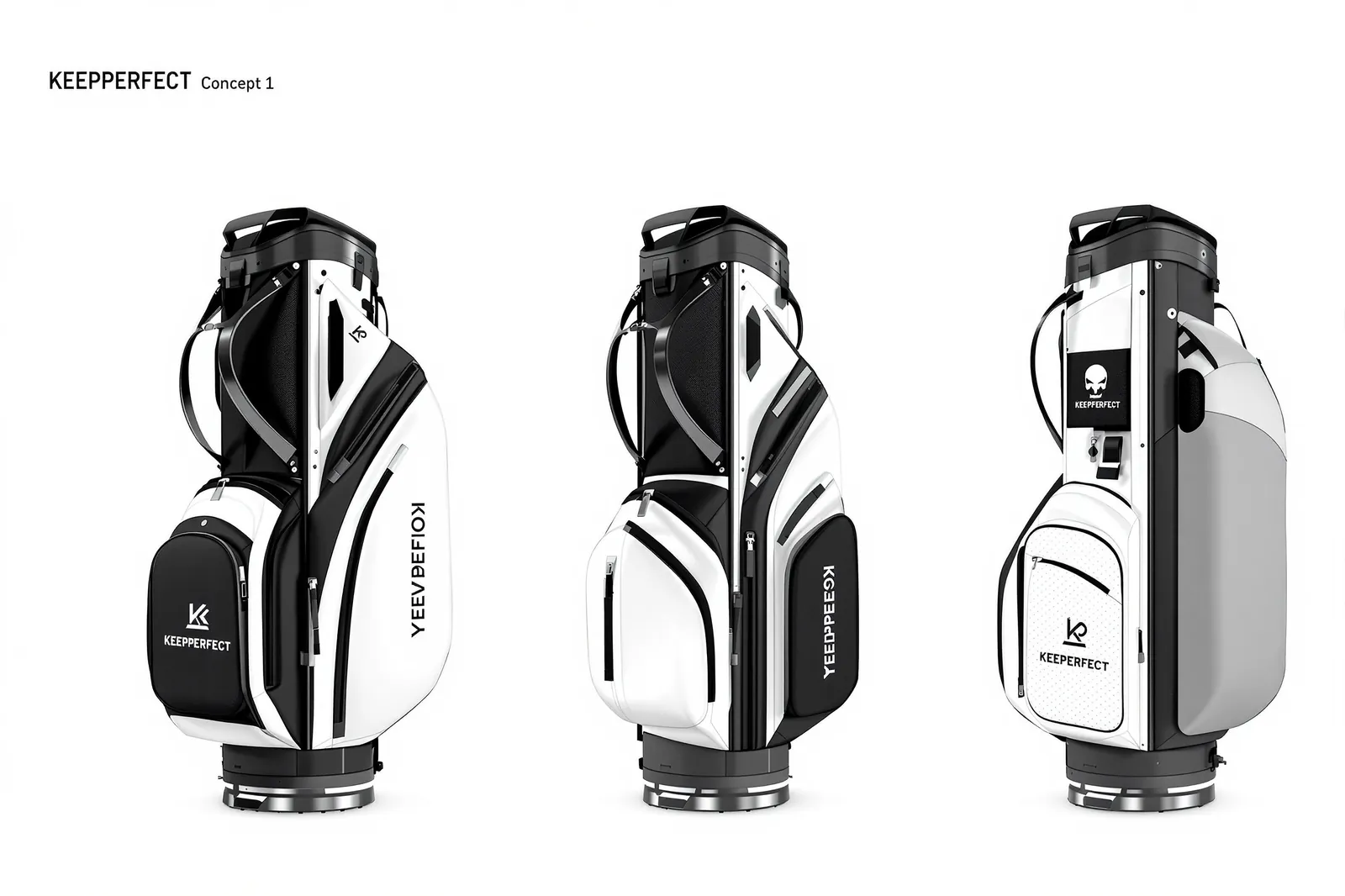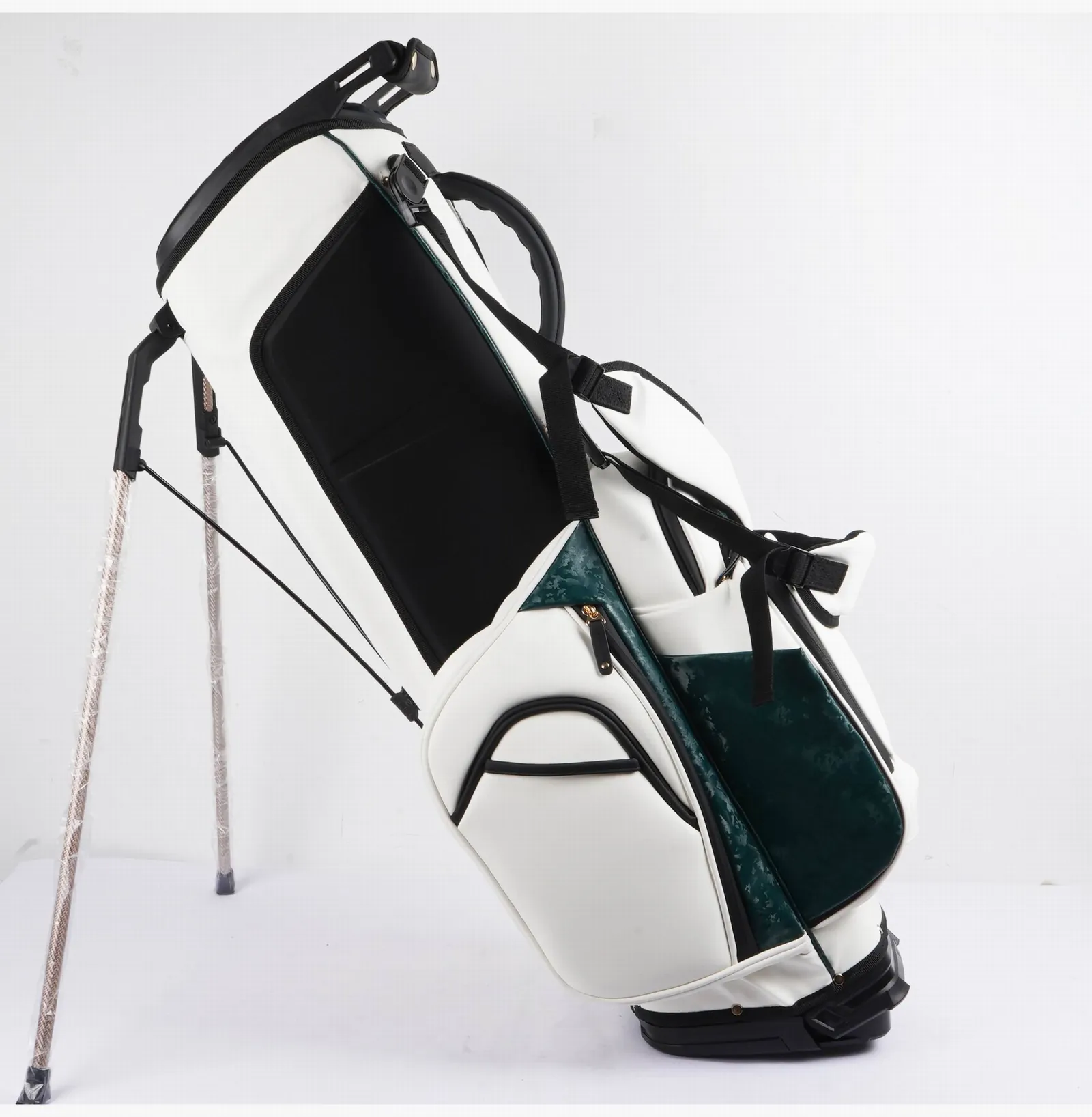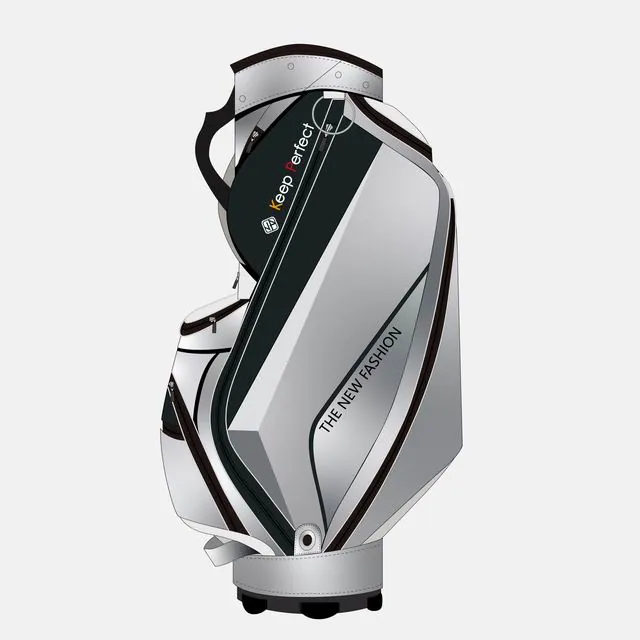
Professional golf bag procurement is a structured process, not a spot purchase: a capable OEM supplier can deliver a sample in 10–20 days, run full production in 45–60 days, accept a working MOQ of 200 pieces (100 for a test order), and sustain about 200,000 bags a month across 7 production lines, 126 sewing machines and 137 staff. This guide walks wholesale buyers and brand teams through the supply chain management and procurement strategy that decides whether a custom golf bag programme ships on budget and on season. We write from the perspective of our affiliated manufacturing network in Quanzhou, Fujian — main plant 4,950 m², founded 2014, founder in the trade since 2004 — and we anchor the advice in verifiable trade data and standard procurement practice rather than marketing rhetoric.
Why a Procurement Strategy Beats a Purchase Order
A single purchase order gets you a batch; a procurement strategy gets you a reliable supply base. The difference shows up in every metric that matters: landed cost, on-time delivery, colour consistency across seasons, and the ability to reorder a bestselling design a year later at the same standard. Golf bags are a slow-turn, hard-goods category with strong seasonal peaks, so the buyer who treats sourcing as an annual planning exercise — rather than a frantic scramble before spring launch — owns the calendar, the spec and the margin.
The core of a strategy is segmentation. Not every SKU deserves the same treatment: a hero staff bag that sells thousands through pro shops behaves differently from a promotional travel cover ordered once. Mature buyers segment their bag lines by volume, margin and season and give each segment its own sourcing policy — firm forward orders for heroes, flexible smaller runs for novelties, and standing reorder triggers for steady sellers.
Reading the Global Golf Bag Supply Base
Golf bag manufacturing is a sewing-intensive business, and the global supply base reflects that. The dominant clusters sit in eastern China — chiefly Fujian and Guangdong — where decades of luggage and sporting-goods stitching built deep pools of skilled machine operators, fabric suppliers and hardware makers. Vietnam and, to a lesser extent, Indonesia add secondary capacity. For a buyer, this geography is usually a positive: one region can supply the whole bag — fabric, hardware, zippers, foam, webbing — without cross-border friction.
What matters more than country is factory depth. Ask how many sewing stations a plant actually runs, how many employees it carries between seasons, and how it absorbs a surge without resorting to overtime-everything. Our own envelope is a useful reference point: 7 production lines, 126 sewing machines, 137 staff and roughly 200,000 bags a month of capacity, with a 4,950 m² main plant founded in 2014 and a founder who entered the trade in 2004. That combination of machine and people depth is what keeps QC load manageable while volume scales.
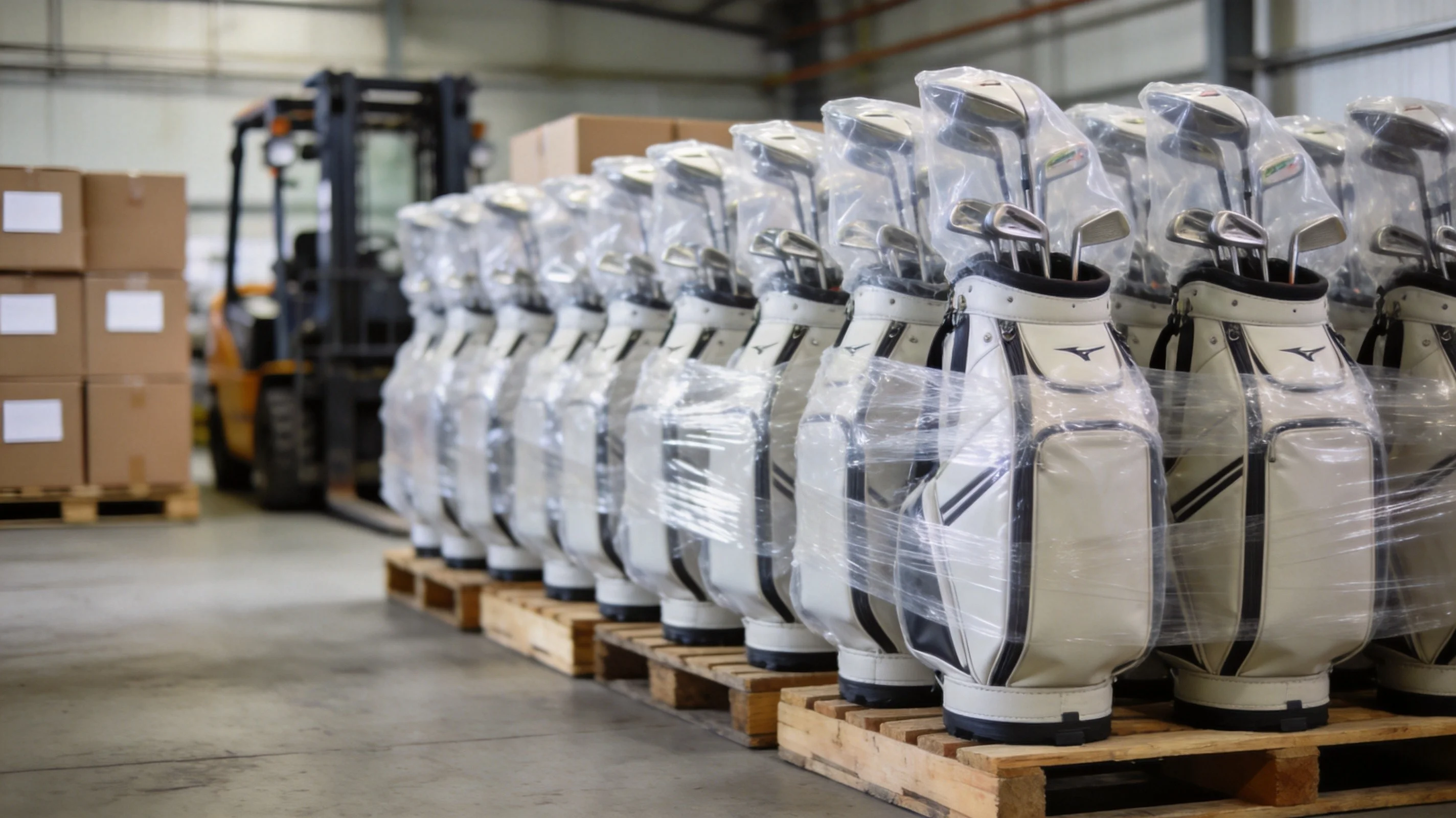
A second structural advantage of concentrated sourcing is the elasticity it gives a growing brand. When a new colourway or a second packaging line needs to move fast, a plant that already runs the pattern library, holds matched fabric lots and knows the QC standard can respond within a week rather than restarting the whole onboarding. That is why successful bag lines are built on a stable primary partner with a breathing-room second source, rather than on whoever quoted the cheapest sleeve last Tuesday. Capacity you have rehearsed is capacity you actually have when the season turns.
Building a Qualified Supplier Shortlist
Procurement discipline starts with a shortlist you can actually audit. For golf bags the qualifying criteria are concrete: (1) a written material list with grade and GSM per textile; (2) hardware and zipper grade statements; (3) an inspection process with documented AQL levels; (4) a working sampling process with clear turnarounds; (5) MOQ and lead-time terms in writing; and (6) evidence of compliance — a social audit covering labour and working conditions, or an SGS on-site audit. Our Quanzhou main plant passed an SGS audit in March 2026; that single document answers a large share of the diligence a retail buyer will run later.
Do the diligence before you need it. A supplier that is vetted, sampled and approved on a slow day is a supplier you can call on a fast one. Vetting under deadline pressure produces compromises that surface as problems mid-season. Keep three names in your bank: one primary partner, one flexible second source, and one specialist for a niche you may not need yet.
The Anatomy of a Winning Request for Quote (RFQ)
The RFQ is the single most influential document in procurement, and most fail by being vague. A golf bag RFQ should fix the bag type; overall dimensions and weight target; divider count and division; pocket count, placement and closure type; strap system and leg mechanism; zipper length and gauge; print or embroidery placement and technique; packing method and master-carton size; target FOB or landed price; MOQ; and the inspections you require. Leave one blank and you invite the supplier to assume — and you will be billed for every wrong assumption.
A strong RFQ also declares intent: whether this is a firm order or an exploratory range, the lead time you need, and the volumes you realistically expect. Honest volume ranges let the factory plan cutting and material commitments, which is what unlocks better pricing. A supplier pricing a six-thousand-piece expectation and a sixty-piece curiosity will not quote the same number.

One of the most overlooked cost drivers is the rework of specifications after bulk starts. A single late change — say, a pocket depth revision confirmed after cutting — can idle a line, scrap material and push the programme past its freight window. Procurement’s most valuable habit is change-control discipline: any specification change after sample approval goes through a documented process with a cost and schedule impact statement before the factory acts. It sounds bureaucratic, but it is the difference between a season that ships and a season that survives.
Sampling: The Gate That Guards Everything
Sampling is where good procurement separates from lucky procurement. The sample is a frozen contract in fabric. Every parameter of the approved sample — panel shapes, stitch gauge, zipper pull, colour, weight, feel — becomes the master against which bulk production is measured. At our Quanzhou plant a custom sample normally takes 10–20 days, including pattern engineering, cutting, sewing and finishing. Plan for one to two revision rounds and add them to your calendar rather than hoping the first draw is perfect.
When the sample is approved, insist the master sample is retained and the measurement report written down. On every reorder, ask for a first-article photo check on new colourways before the full batch runs. This one habit prevents the classic bulk failure: a colourway that looks fine in a sample photo but drifts across a multi-thousand-piece run.
Lead time is not a single number; it is a stack of commitments that each need an owner. In our model the stack is: quotation within days, sample in 10–20 days, material and cutting in the first week of production, sewing and finishing through the long middle, and final inspection and handover 2–4 days after the last bag is sewn. A buyer who asks for a commitment on each rung, not just the final date, gets a schedule honest enough to manage and tight enough to meet. We quote the full stack because a commitment you cannot decompose is a commitment you cannot fix if it slips.
MOQ, Pricing and the Unit-Economics Conversation
Price in golf bags is a function of material grade, construction complexity and volume — not a magic number. A buyer should ask how a unit price is built rather than simply push for the lowest figure. The honest blocks are: fabric and hardware cost, labour hours per bag, cutting waste, packing, QC and factory margin. A quote that cannot be decomposed is a quote you cannot negotiate. MOQ is the volume at which those components price out sustainably; our standard is 200 pieces, with test orders accepted from 100 pieces so a brand can validate product and process before a full run.
Negotiate the envelope, not just the unit price. A lower FOB with high freight leakage or a tight lead time that forces airfreight is a worse deal than a slightly higher FOB on a stable sea lane. Procurement professionals value total landed cost and calendar fit over a bright single number on a quote.
Contracting and Terms That Protect Both Sides
Write down what was agreed. The written agreement should cover specifications, samples, MOQ, lead time, incoterms, payment schedule, inspection rights, defect and rework policy, and force majeure. Payment terms in the industry commonly run a deposit at order placement with a balance against shipping documents or pre-shipment inspection; agree these up front and hold to them. Clear deposit and balance terms protect the factory’s cash and the buyer’s leverage equally.
Incoterms deserve their own paragraph because they decide where risk and cost transfer. EXW, FOB, CFR, CIF and DDP change who owns freight, insurance and import clearance. A buyer who wants predictable landed cost should understand what each term bundles. When in doubt, price both FOB and DDP with your forwarder and compare the real difference.
Managing the 45–60 Day Production Window
Between sample approval and ex-works handover sits the production window — for our network typically 45–60 days. That window decomposes into phases the buyer should track: material confirmation and cutting in the first 7–10 days; the long sewing, assembly and finishing middle; then final inspection, packing and handover in the last 2–4 days. Each phase has its own risk. Fabric arrival shifts cutting; a colourway change resets the middle; a late packing spec delays the handover.
Procurement’s job is to hold the gate that keeps these phases sequential rather than overlapping messily. Freeze colours before cutting, not after. Confirm cartons before inspection, not during. A production calendar with named checkpoints lets you see slippage while there is still time to act.
Quality Control and Inspection Strategy
Quality in long-distance sourcing is a system, not a hope. The system has four layers: the factory’s own in-process checks on every piece; a pre-shipment inspection (PSI) — a statistical AQL draw on the packed goods — that you or a third party commission; the shipping documents that carry the inspection result; and the receiving inspection on arrival. Our plant runs its own 100% department checks at the end of the line, and we have passed an external SGS audit, which gives retail buyers confidence.
Define the AQL standard explicitly in your RFQ and contract, including which defects are critical, major and minor, and the sample size and acceptance number. Leaving inspection to “the usual standard” invites a different standard on each shipment.
Freight, Incoterms and Landed-Cost Management
Landed cost is the number that pays your bills, assembled from freight, insurance, duty, brokerage, port handling and last mile on top of FOB. Golf bags are bulky and volume-heavy, so chargeable volume — not gross weight — drives most quotes. Packing that lowers dimensional weight is therefore a direct landed-cost lever. Ocean FCL suits runs of hundreds to thousands; air rescues samples and reorders; rail lanes from China to Europe split the difference.
Because golf is seasonal, lock a freight and duty assumption into your planning calendar at booking time. Freight rates and transit times move, and a buyer who builds a corridor — a rate band and window with a cap — protects the programme from the variables most likely to shift before delivery.
On the customs side, classification for golf bags is well-settled but buyer-verifiable.
Customs classification for golf bags is well-settled but buyer-verifiable. Into the US, golf bags sit under HTSUS heading 4202 with the rate published by the US International Trade Commission; into the EU, under CN code 4202 with duties documented in the EU’s Access2Markets tool. Verify the current rate at booking time against those official sources, because both schedules are revised and occasionally restructured.
Compliance data — origin, materials, value and the correct HTS/CN code — should be collected at the factory when goods are packed, not reconstructed at the border. A mismatch between the commercial invoice and the packing list is the fastest way to stall a container and generate a storage bill many times the error that caused it.
Risk Management in Multi-Season Sourcing
No supply chain is risk-free, but professional procurement manages exposure rather than predicting the future. Hold a backup production option; keep safety stock on hero SKUs; contract quantity flexibility; and model the calendar with buffer between production completion and launch. Our 200+ brand / 100+ country footprint shows that resilient buyers rarely need exotic solutions in a crisis — they simply shipped fourteen days earlier, or split an order across production windows, because the buffer was already in the plan.
Document every assumption at the start: lead time, freight band, duty rate, MOQ and quality standard. When a variable moves you can see the effect on the plan and decide deliberately rather than reactively.
Sustainability and Ethical Compliance as Procurement Criteria
Sustainability and ethical compliance have become procurement criteria, not labels. EU-facing brands face packaging and due-diligence expectations, and US retailers run responsible-sourcing programmes. Practical levers a buyer can contract for: recycled or bluesign-tracked fabrics, reduced package weight, cartons sized to eliminate dimensional-weight waste, and a factory able to evidence a social audit — the SGS audit our Quanzhou plant passed in March 2026 is precisely the document a retailer will ask to see.
The cheapest sustainability win is packing design that reduces CBM: a collapsed carton moves the same volume for less freight and less waste. Design for transportability and the sustainability story follows almost automatically.
A receiving-side inspection is only as good as the digital packing list it checks against. We encourage buyers to ask for the packing data in a structured, machine-readable form at the same moment the factory issues the shipping documents. When every master carton carries a scannable mark linked to a piece count and a colourway, the receiving warehouse reconciles the container in minutes and the stock system gets accurate quantities before the cartons are even opened. That discipline compounds across seasons: accurate intake means accurate forecasting, and accurate forecasting is what eventually lets a buyer order with confidence instead of padding every quantity “just in case”.
Finally, keep the commercial and technical relationship telegraphed but human. The best procurement outcomes we see come from buyers who share their season calendar early, explain why a date matters, and listen when the factory says a lead time is aspirational rather than committed. Supply chain is a negotiation of commitments across a chain of partners; the buyers who treat it as a partnership of shared schedules, rather than a spot-on-spot tug of war, reliably get the better price and the better place in the queue when capacity tightens.
Procurement Metrics and Dashboards
| Metric | What It Tracks | Healthy Signal |
|---|---|---|
| On-time-in-full (OTIF) | Orders delivered on time, complete | > 90% |
| Sample approval cycle | Days sample to sign-off | 10–20 days |
| Production lead time | Material confirmed to handover | 45–60 days |
| Landed-cost variance | Actual vs forecast landed cost | < 5% |
| First-pass inspection yield | Pieces passing PSI first time | > 95% |
| Supplier concentration | Share of spend in top supplier | < 70% |
Frequently Asked Questions
- What is a sensible MOQ for custom golf bags?
- The standard custom MOQ is 200 pieces, with test orders accepted from 100 pieces so a brand can validate a first programme.
- How long does sampling realistically take?
- A custom sample usually needs 10–20 days including pattern, cutting, sewing and finishing, plus your own revision rounds on top.
- How long is bulk production from order to handover?
- Full production runs 45–60 days from material confirmation depending on complexity and colour count.
- What should go into a golf bag RFQ?
- Bag type, dimensions, dividers, pockets, straps, zippers, print or embroidery, packing, MOQ, target price, lead time and inspection standard — a complete specification.
- Which customs code applies to golf bags?
- Golf bags fall under HTSUS heading 4202 for the US and CN code 4202 for the EU; verify current rates on the official USITC HTSUS portal or EU Access2Markets at booking time.
- How do I protect a seasonal launch schedule?
- Freeze the spec and sample early, hold the 45–60 day production window, add freight and buffer, and set the service promise from the landed date rather than the ex-works date.
Taken together, these disciplines form a repeatable playbook: segment the range, vet the supplier on evidence, write the spec once, freeze the sample, hold the 45–60 day production window, verify the duty rate against the authority source, inspect at AQL, reconcile the container digitally and review the calendar after every season. None of it is exotic, and all of it compounds. Brands that run this playbook consistently see fewer emergency airfreight bills, fewer non-conforming cartons and fewer missed launch windows — which is exactly the difference between a sourcing department and a mature supply chain function.
A mature supply-chain function is the quiet engine of a bag brand’s margin, calendar and reputation — and it is built one disciplined decision at a time.
From the first RFQ to the final container inspection, the buyers who win are the ones who treat procurement as a strategy and the supplier as a long-term partner to be planned with, not a price to be beaten.
Sources
Duty, classification and trade references in this guide can be verified against these official sources:
- US Harmonized Tariff Schedule — USITC — heading 4202 rates for golf bags.
- US Customs and Border Protection — import entry and classification guidance.
- European Commission Taxation & Customs Union — EU duty and combined nomenclature.
- EU Access2Markets — current CN duties and formalities.
- World Customs Organization — HS classification framework underpinning heading 4202.
Plan your next range with our wholesale sourcing team, compare wholesale pricing, or go factory-direct. For custom builds, see OEM/ODM services and custom solutions. Contact service@junyuanbags.com or +86 17750020688.