Golf bag colour psychology and design trends for 2025 centre on disciplined premium neutrals refreshed by calm sage greens, dusty blues and warm whites, with expressive coral and electric-blue accents and a return to heritage tones — a "both directions at once" market that rewards brands wise enough to anchor one tone and add a single accent. This guide gives you the exact colour directions, the psychology that explains why they sell, the regional differences every exporter must respect, and a manufacturing playbook to turn a trend into a reproducible production colourway.
The golf bag market in 2025 is moving faster on colour than on any other attribute. Demographics are widening, retail has shifted to visual-first e-commerce, and buyers are more psychologically and environmentally aware than ever. The result is that colourway is now the single highest-leverage design decision per unit of effort. This article breaks the theme into the concrete colour directions, the market and psychology data behind each, the material decisions that keep colour alive, and the exact OEM workflow that takes a chosen hue to a shipping carton.
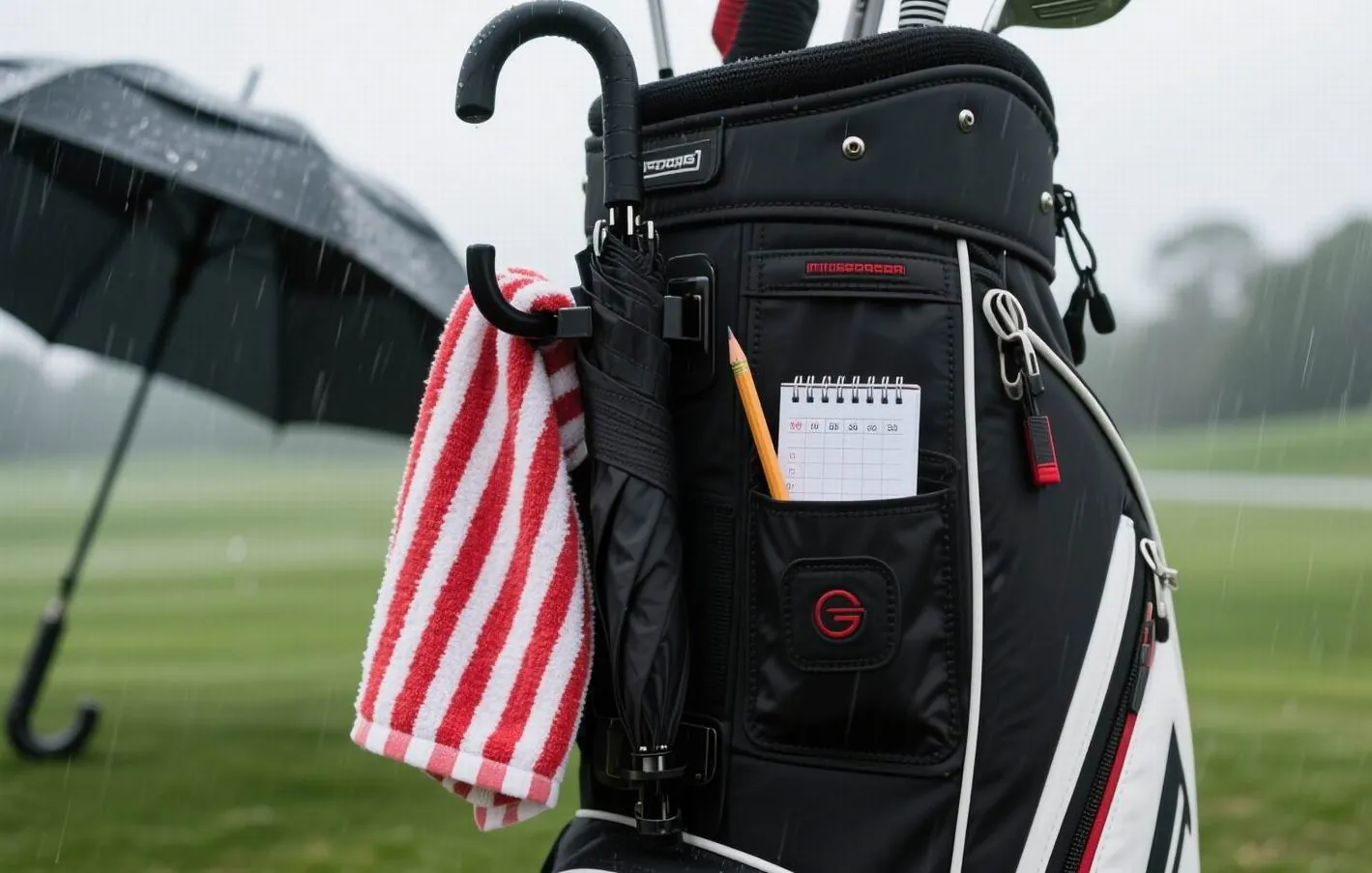
Calm green golf bag reflecting the 2025 colour trend toward sage and mint
The 2025 Colour Landscape at a Glance
The headline of 2025 golf bag colour is not one breakout hue but a consolidation of confident directions. Premium neutrals — black, deep navy, charcoal, warm white — remain the commercial backbone because they register as premium, photograph cleanly and carry logos perfectly. Layered on top are calm saturated greens (mint to sage), dusty blues, warm off-whites, and expressive accents of coral and electric blue. Counterbalancing the bright consumer floor is a return of heritage tones — forest green, tan, saddle — for prestige and club-style markets.
Rise of Calm Greens
Sage and mint green are the standout consumer story of 2025. They read as calm, modern and sustainable, photograph softly and appeal to the growing number of golfers who want visual rest from saturated product worlds. They work as both base and trim.
Acquisition of Expressive Accents
Coral and electric blue are the energy notes brands thread through piping, zippers and logo panels. They inject confidence and social visibility into neutral bases without overwhelming the range's premium core.
The commercial logic is that these directions serve several audiences at once: authority for professional and corporate buyers, calm and sustainability for everyday players, energy for social and consumer buyers, and prestige for traditional clubs. This is why the range that anchors one neutral base and rotates one accent consistently outperforms a rainbow assortment.
Golf Bag Colour Trend Matrix 2025
| Colour Direction | Psychology | Best Segment | 2025 Momentum |
|---|---|---|---|
| Black / Navy / Charcoal | Authority, premium, trust | Corporate, professional | Steady volume leader |
| Sage / Mint Green | Calm, sustainable, modern | Consumer, women's, juniors | Fast rising |
| Dusty Blue / Warm White | Trust, cleanliness, freshness | Resort, lifestyle | Growing |
| Coral / Electric Blue | Energy, confidence, visibility | Consumer, social | Trend accent |
| Forest / Tan / Saddle | Heritage, prestige | Clubs, Europe | Returning |
| Recycled / Low-impact tones | Responsibility, trust | Eco-aware buyers | Mainstreaming |
Read this matrix as your brief template. For each market or segment you serve, select the dominant psychology, map it to the matching colour direction, and specify the base, accent and finish in that order. This transforms "follow the trend" into a specification a factory can cost and sample confidently.
Why Calm Greens Owned the 2025 Conversation
Calm greens — from mint to sage — became the defining consumer colour of 2025 for a clear reason: they satisfy several needs simultaneously. Psychologically, green lowers arousal and signals balance, recovery and harmony, supporting golfers who want their equipment to feel restful rather than taxing. Commercially, green visually encodes sustainability, aligning with the recycled-fibre and low-impact options now common across the category. And aesthetically, sage and mint photograph softly and integrate easily with warm whites and natural tones.
The rise of calm greens is also a generational shift. Younger golfers and the fast-growing women's and juniors segments are drawn to lighter, fresher finishes that read as modern and intentional rather than aggressive or masculine-default. Brands that dismissed green as "just grass-coloured" and unprofitable are now re-briefing their consumer lines around sage and mint bases.
None of this means abandoning the commercial core. Black, navy and charcoal still carry corporate and professional volume, and for good reason — they are the psychology of authority and trust. The winning 2025 strategy is precisely to keep that core while adding the calm-green consumer floor and a coral or electric-blue accent, giving a range both stability and currency.
Dusty Blues, Warm Whites and the Premium Refresh
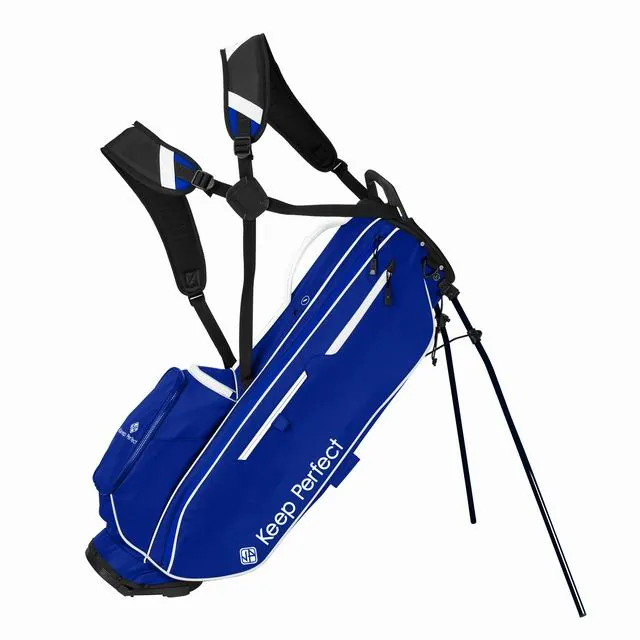
Next to calm greens, dusty blues and warm whites are the quiet winners of the premium refresh. Dusty blue — a softened, less-saturated blue — inherits the trust and focus psychology of its parent colour while reading as more modern and relaxed than a hard navy. Warm white, with a hint of cream, captures the cleanliness of white without the clinical harshness, and it photographs with a premium, sun-washed quality that suits both resort retail and home-market e-commerce.
These tones are especially effective in resort and lifestyle segments, where bags double as fashion statements and travel companions. They pair cleanly with natural tan and earth-tone accessories, and they give a bag a "designed, expensive" impression before any feature is examined. Because they are light, they also reflect heat, a genuine comfort consideration for summer play.
The trade-off is maintenance: light colours show dirt and wear faster, so the finish and coating choices matter more. Solution-dyed and high-fastness pigments, plus a protective coating, keep dusty blues and warm whites looking fresh across their working life. Our golf bag care guide covers the routines that protect them.
Expressive Accents: Coral and Electric Blue
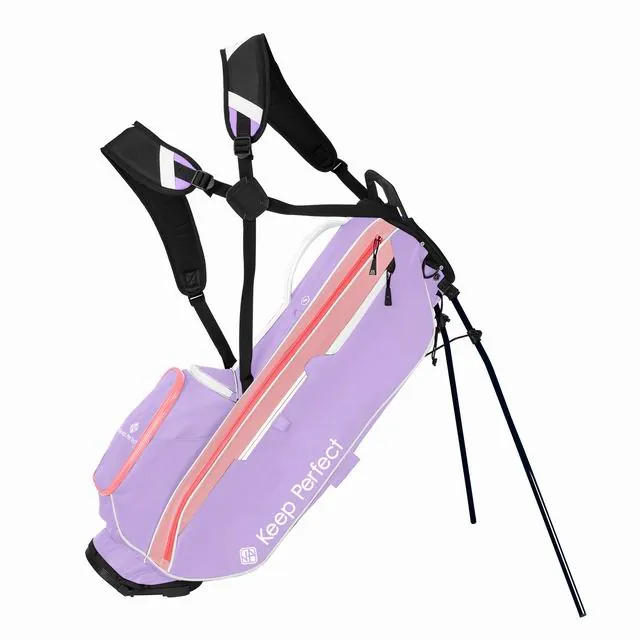
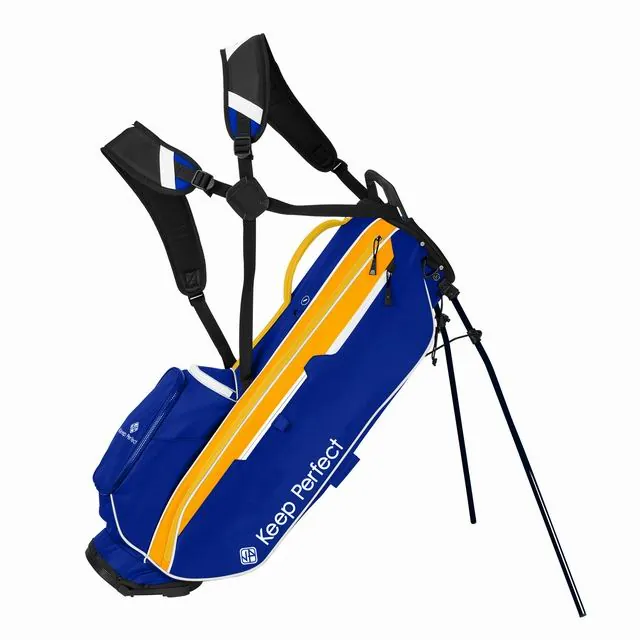
Every on-trend range in 2025 needs an energy note, and the market's preferred accents are coral and electric blue. Coral carries warmth, optimism and visibility without the aggression of a full red; electric blue provides an electric, modern energy that contrasts cleanly with both navy and white. Used as piping, zipper pulls, logo panels and tonal embroidery, these accents let a neutral-backed range feel current and alive.
Accents also drive e-commerce click-through, because saturated, high-contrast imagery performs materially better in product grids. A black, navy or sage bag with one electric-blue accent photographs dramatically better than the same bag in flat monochrome — and that photograph is often the first and only sales pitch a shopper sees.
The discipline is restraint: one accent, placed consistently, not several competing colours. A range that keeps a single hero accent builds recognition and keeps the psychological signal clear, which is precisely why the "one base, one accent" rule drives so much of the category's profit.
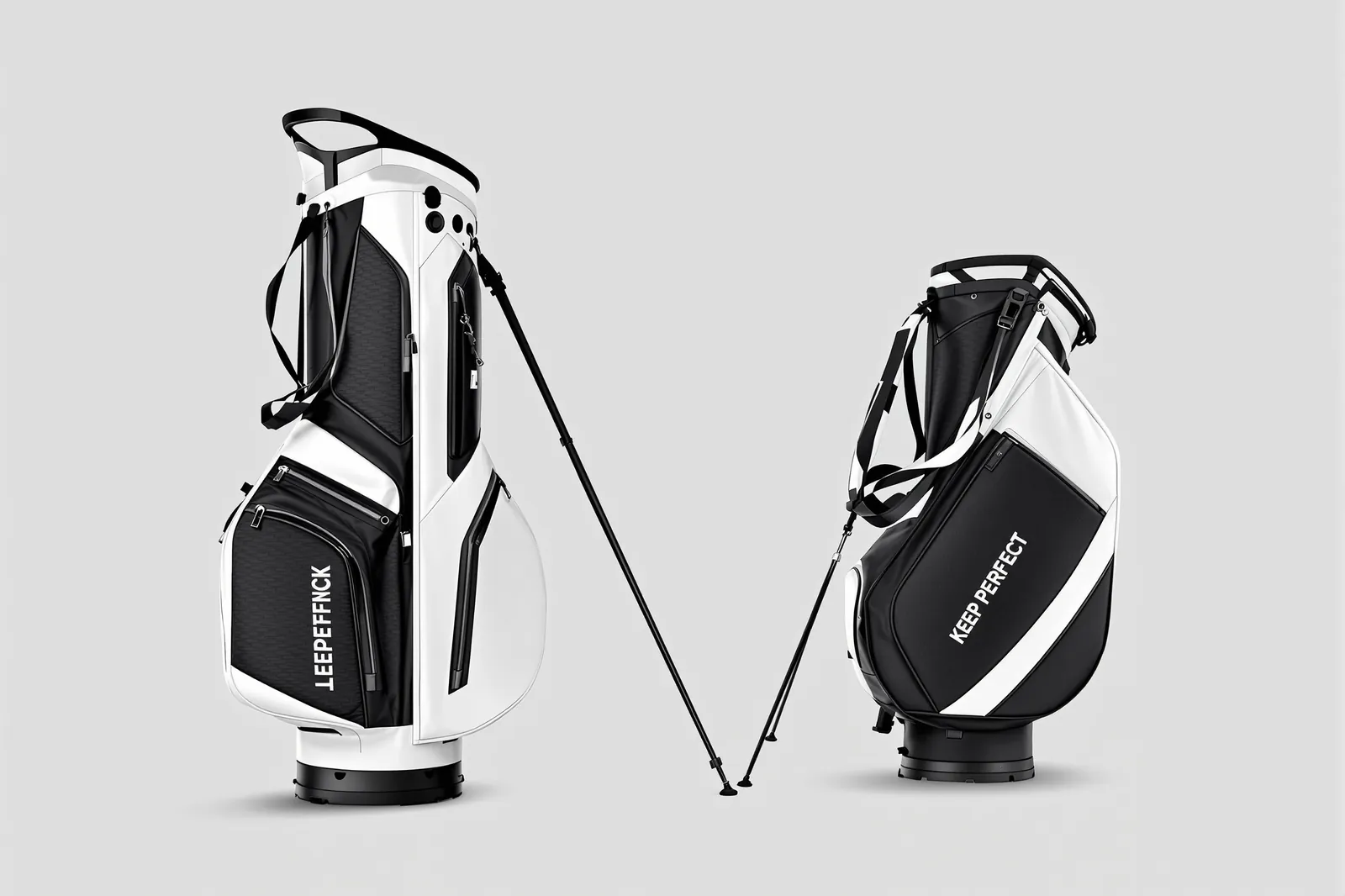
Dusty blue and warm white golf bag in a premium 2025 colourway
The Return of Heritage Tones
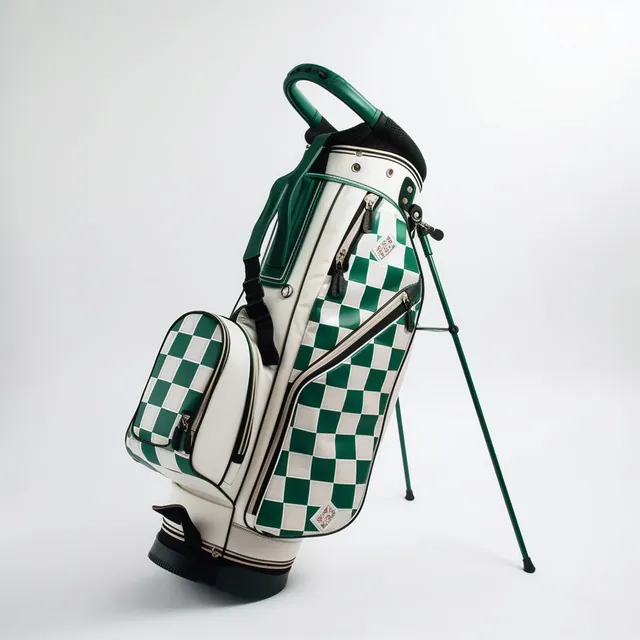
Counterbalancing the bright consumer floor, heritage tones are enjoying a real comeback. Forest green, tan and saddle speak to the enduring prestige of classic club golf, and they are increasingly paired with earthy graphics or subtle tonal embroidery. They appeal to tradition-minded clubs, to European markets where understated luxury dominates, and to any buyer looking for a timeless, resale-friendly colour that resists seasonality.
Heritage tones work especially well with genuine or high-quality synthetic leather details, brass-toned hardware and woven logos, creating the authoritative, established impression that established institutions prefer. For a brand, a heritage-toned staff bag or membership bag conveys permanence and quality in a way no neon finish can.
Because heritage tones are inherently neutral and low-maintenance, they also wear well and hold resale value, which reinforces the prestige psychology. A brand can run a heritage range for years without a costly recolour, protecting the colour-equity built over time.
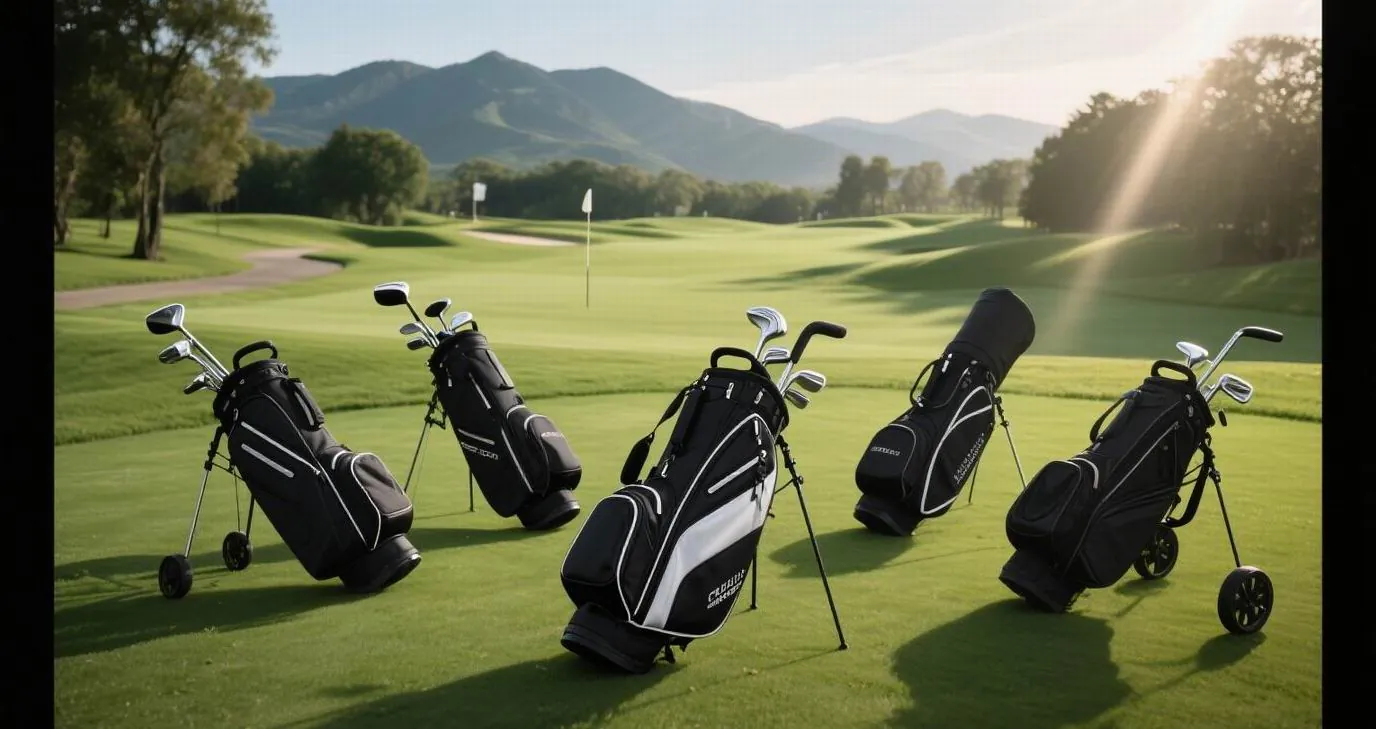
Golf bag using coral and electric blue accents for 2025 energy and visibility
Sustainability Meets Colour: The Eco Colourway
In 2025 sustainability is no longer a niche add-on; it shapes colour expectations. Recycled-fibre and low-impact-dye options naturally lend themselves to the calm greens, warm whites and earthy heritage tones now in vogue, so climate responsibility and the trend palette reinforce each other. Crucially, the winning approach signals responsibility through the palette and materials themselves rather than through loud messaging the buyer already distrusts.
For manufacturers, this means the recycled content and dye process are as much a colour decision as a cost one, because they determine achievable shades and finish texture. A brand that wants calm green bases with a sustainable claim needs a factory that can dye recycled polyester to a consistent, high-fastness green and document it. Material guidance across the range is in our sustainable golf bag design guide.
The commercial payoff is trust. Buyers increasingly verify environmental claims before purchase, and a bag whose colour, material and process all support the sustainability story converts better and attracts repeat custom. The eco colourway is therefore not a compromise; it is a competitive advantage aligned with 2025 psychology.
Regional Colour Preferences Every Exporter Must Respect
Colour psychology and preference vary significantly by region, and exporters who ignore this leave money on the table. North American buyers favour clean, logo-forward designs anchored in navy, black and white with one strong brand or accent colour. European buyers lean to understated, heritage-derived tones that project quiet prestige. Quickly-growing Asia-Pacific markets gravitate toward bright, expressive and fresh finishes that prioritise self-expression. Corporate and academy buyers everywhere want cohesion — one brand colour on a neutral base.
This is why the single "global colourway" is usually suboptimal. The disciplined approach is to define a global trend direction — say, premium neutral base plus one accent — and then run the accent or base selection to suit each region's psychology. From the same pattern block, a Canadian corporate order and an Asia-Pacific consumer order can carry different colourways without multiplying production complexity significantly.
A capable OEM partner supports this by managing multiple colour-matching references against one tooled design. The regional differences are detailed in our global golf bag market analysis, while this guide focuses on the colour decisions themselves.
From Trend to Production: Colourway Development Workflow
Turning a 2025 trend into a shippable bag is a structured process, and the brands that win follow a repeatable workflow. First, define the dominant psychological tone for your market and map it to a colour direction. Second, specify the substrate and finish — solution-dyed or high-fastness pigments for durability, matte or textured for premium read. Third, fix the accent. Fourth, have the factory match a colour standard and produce a physical sample for approval before bulk.
QUANZHOU JUNYUAN BAGS (service@junyuanbags.com, +86 17750020688) is an experienced partner for exactly this workflow. With industry experience since 2004 and a company founded in 2014, it operates through an affiliated factory of approximately 4,950 m² staffed by roughly 137 people across seven production lines and 126 sewing stations, with monthly output near 200,000 pieces serving over 200 brands in more than 100 countries. A typical programme runs at a 200-piece MOQ (test orders from 100), sampling in 10–20 days and bulk in 45–60 days.
The physical-sample-and-lock step is non-negotiable for colour, because colour mismatch is the most common rejection and return reason in the category. Locking a reference against a documented batch-tolerance standard protects the entire trend-aligned strategy. The full sequence is covered in our customization and production process guide.
Testing Colour for UV, Fading and Batch Consistency
A colourway's value is only realised if it survives the reality of golf: strong sunlight, sweat, repeated wiping and years of use. The two tests that matter most are UV-fading resistance and batch-to-batch consistency. Solution-dyed polyester and high-fastness pigments hold colour far longer than surface-printed designs, which is why premium brands specify these substrates for bright accents and light bases that would otherwise turn chalky within a season.
UV exposure is the main enemy of any colourway. Light bases and saturated accents fade first, and the rate depends on both the dye system and the protective coating or treatment applied at finishing. For the calm greens, dusty blues and warm whites rising in 2025, specifying a UV-stable substrate and a protective coating keeps the premium, sun-washed look intact rather than letting it degrade into a washed-out approximation of the original intent.
Batch consistency is the second gate. The same sage or electric blue can drift between dye lots unless the factory caps production against a locked colour-matching standard and documented tolerance. Verifying this capability before committing is the difference between a range that stays recognisable across seasons and one that slowly drifts into mismatched panels. This discipline is exactly what a serious buyer confirms with the factory before bulk production begins.
Colour Prediction and the Psychology Driving 2025
The 2025 palette is not arbitrary; it traces a documented shift in consumer psychology. After seasons of saturated, high-energy hue, golfers and buyers are gravitating toward calm, restorative tones — sage, mint, dusty blue, warm white — that signal balance, premium quality and a return to quieter confidence. These calm directions coexist with a renewed appetite for expressive accents for visibility and self-expression, so the season reads as a balance of calm bases and intentional colour punctuation rather than a single dominant hue.
For manufacturers and brands, the psychology behind the palette is a sourcing signal. Because calm greens and dusty blues pair naturally with matte, technical finishes, the trend favours solution-dyed, high-fastness substrates that hold these subtle tones without fading. And because accents carry the energy, the colourway architecture — calm base plus one expressive accent — is the design pattern that turns the psychology into a manufacturable, repeatable range. This is the connection between the 2025 colour direction and the products that will actually sell.
Seasonal Cycles and the 2025 Colour Calendar
Colour is seasonal in golf as much as in fashion, and timing the 2025 direction to the buying calendar protects margin. Rising calm greens and dusty blues tend to lead spring and resort-season ranges, while heritage tones and rich neutrals carry autumn and winter programmes. The design decision is to plan one anchor colourway per season and rotate the accent, keeping the pattern block constant so that sampling (10–20 days) and bulk production (45–60 days) fit a realistic schedule.
Timing also affects manufacturing cost and lead time. Early seasonal planning lets a brand lock material and dye scheduling, avoiding the rush premiums and tight sampling windows that eat margin when a collection is briefed late. A factory that holds colour-matching standards across years lets the brand reintroduce a proven colourway each season while only redeveloping the fresh accent.
The commercial result of timing the calendar well is a range that feels current without reinvention risk: the consumer floor evolves with calm and expressive accents while the premium core stays recognisable. This is the disciplined way to make 2025's colour psychology a repeatable selling engine rather than a one-season bet.
Frequently Asked Questions
- What is the biggest golf bag colour trend for 2025?
- The defining consumer trend is calm sage and mint greens, while premium neutrals (black, navy, charcoal, warm white) remain the commercial core. Coral and electric-blue accents add energy, and heritage tones such as forest green and tan are returning for prestige segments.
- Why is green so popular in 2025 golf bags?
- Calm greens signal balance, recovery and, visually, sustainability — the three things modern buyers increasingly value. They photograph softly, integrate with warm whites and natural fibres, and appeal strongly to younger, women's and juniors segments.
- Are bright colours still selling well?
- Yes, but as accents rather than full-range statements. Coral and electric blue are the preferred 2025 energy notes, used as piping, zipper pulls and logo panels on neutral bases, because they lift e-commerce photography without overwhelming a premium core.
- Do colour trends differ by region?
- Yes. North America favours clean, logo-forward neutrals with a strong brand colour; Europe prefers understated heritage tones; Asia-Pacific favours bright, expressive finishes; corporate and academy buyers want cohesive single-brand colours on neutral bases.
- How do I protect my colourway against fading?
- Specify solution-dyed or high-fastness pigments, use a protective coating, and store bags out of direct sunlight. Verify your factory has a colour-matching standard with batch tolerance so panels match within spec and don't fade unevenly.
- Can I get a custom 2025 colourway produced?
- Yes. Custom colourways are developed through an OEM or ODM programme at roughly a 200-piece MOQ (test orders from 100), with 10–20 day sampling and 45–60 day bulk production. QUANZHOU JUNYUAN BAGS can match a colour standard and lock it via physical sample across golf bags and related categories.
Conclusion
Golf bag colour psychology and design trends for 2025 reward the brand that anchors one functional tone, adds a single expressive accent and protects the colourway through disciplined material and factory choices. Calm greens express the modern consumer mood, premium neutrals carry commercial and corporate volume, coral and electric-blue accents drive visibility and clicks, and heritage tones deliver prestige — all readable through the same psychological map that explains why they sell.
The competitive advantage in colour is not being first to guess the next hue; it is reading the direction correctly, translating it into a manufacturable specification and locking it through a physical sample at a capable factory. Do that, and the colourway works for you season after season. The experts at QUANZHOU JUNYUAN BAGS can help you take a 2025-colour idea from brief to bulk reliably — get in touch at service@junyuanbags.com or +86 17750020688.
Author & Manufacturing Note
QUANZHOU JUNYUAN BAGS — OEM/ODM golf bag manufacturer. Industry experience since 2004; company founded 2014; affiliated factory approx. 4,950 m²; seven production lines, 126 sewing stations, ~137 staff, monthly output ~200,000 pieces; serving 200+ brands across 100+ countries; SGS-reviewed March 2026. Standard OEM MOQ 200 pieces (test orders from 100), sampling 10–20 days, bulk production 45–60 days.
Contact: service@junyuanbags.com · WhatsApp/Phone +86 17750020688