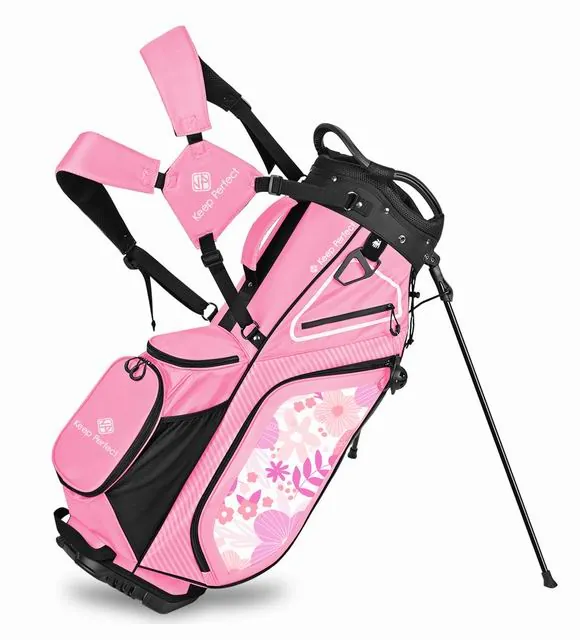
Golf Bag Manufacturer Analysis 2025
For B2B buyers in 2025, the decisive comparison is not brand versus brand but brand versus manufacturing capability: an established affiliated factory such as QUANZHOU JUNYUAN BAGS can deliver the same fabric, hardware and stitching standards as a named brand at a fraction of the retail price, with a 200-piece MOQ, 100-piece test orders, 10-20 day sampling, 45-60 day bulk production, and an audited production base. Whether you should buy a branded bag or manufacture your own via OEM/ODM comes down to margin, control and volume. This guide sets out the factory-level metrics that separate reliable producers from unreliable ones, and gives you a comparison framework built on capability, quality control and honest unit economics rather than on logos.
Read on, and you will finish with a practical checklist you can apply to any supplier, in any golf producing region. The same discipline keeps margin, quality and lead time under control at every order size.
Brand vs Manufacturer: Two Different Comparisons
There are two distinct questions in golf bag procurement, and confusing them leads to bad decisions. The first is which brand product to buy for yourself or resell; the second is which manufacturer to work with if you want your own line or better unit economics. They demand different data.
Brand comparison is about specification, positioning, warranty and resale. Manufacturer comparison is about production capability, quality control, capacity, minimums and lead time. A brand is a promise and a marketing machine; a manufacturer is a production base with machinery, people and process. For a wholesaler, distributor or private-label owner, the manufacturer matters more, because it determines the unit cost, the quality floor and the reliability of supply that the brand never shows you.
The two connect because most named brands do not build everything themselves. They source from specialist golf bag factories, add branding, distribution and warranty, then mark the product up. Understanding the manufacturing layer underneath the brands reveals that many brand premiums are packaging over the same underlying factory capability.
For the buyer this is not bad news; it is opportunity. It means the same manufacturing excellence that a familiar brand leverages can be accessed directly, with the margin redirected from an intermediate brand to your own operation and your own customers. Knowing the distinction between brand and manufacturer is the difference between paying for capability and paying for a name that sits between you and that capability.
The Factory Capability Metrics That Actually Matter
When comparing manufacturers, a short set of hard metrics separates a professional production base from a workshop. Collect these numbers before committing to any partner.
Production lines and machinery. The number of lines and machines indicates real capacity and the ability to run multiple designs in parallel. A facility operating on the order of 7 production lines with 126 sewing machines and 137 employees has the depth to handle varied orders without stalling. Monthly capacity. Stated capacity in units, for example roughly 200,000 per month, tells you whether the factory can absorb your order and grow with you. Markets and brands served. A producer that has shipped to more than 200 brands across 100-plus countries has survived demanding volume and quality expectations. Certification and audits. An independent audit such as an SGS review (for this example, completed March 2026) is an objective check on premises, process and social compliance. MOQ and lead time. Standard 200-piece MOQ with 100-piece test orders, 10-20 day sampling and 45-60 day bulk production are signs of a structured, planning-capable operation.
One subtle but informative metric is how the factory states numbers. Factories that give specific, internally consistent figures for lines, machines, staff, capacity and dates are usually sharing real operational data; factories that stay vague or inflate uniformly are a warning sign. Cross the stated capacity with the machines and staff through a simple sanity check; if they do not reconcile, keep probing.
It also helps to confirm the factory can actually produce the bag category you need, stand bag, cart bag, travel bag or staff bag, with relevant tooling and patterns on hand. A producer's prior experience across a category reduces sampling time and refines the build, and it shows up in the quality of the first sample rather than in any brochure claim.
Where two factories are otherwise equal, weighting these metrics according to your own order profile produces a fair ranking that a marketing pitch cannot change.
Quality Control as a Differentiator
Quality control is where manufacturers distinguish themselves more than anywhere else. The best factories treat quality as a staged process rather than a final inspection.
A reliable control sequence begins with incoming raw-material inspection, verifying fabric denier, weight, colour fastness and hardware before anything reaches a sewing line. In-line checks catch stitching defects and alignment issues while they are cheap to fix. Zipper seam and slider testing, stand function tests repeated over cycles, base plate attachment checks and a final random sampling before packing close the loop. A factory that can describe this chain specifically, not vaguely, is demonstrating real process.
For B2B buyers, auditing the quality process is more important than auditing the promotional claim. Ask for the defect-tracking data, the sampling procedure and the standards the outgoing inspection applies. A factory that measures and reports its own quality is more credible than one that only promises it.
Comparing Unit Economics: Brand Premium vs OEM Cost
Unit economics exposes why manufacturer comparison matters commercially. A famous-brand golf bag retailing for $300 may carry a factory cost well under half that, with the balance absorbed by branding, distribution, marketing and retail margin. An OEM bag of the same fabric class and hardware grade sourced directly can land at a fraction of the retail price, because those layers are removed.
The comparison that matters for a reseller or brand owner is margin, not list price. A private-label or OEM program that converts factory cost into a branded product at a controlled price can support retail pricing that competes with established names while preserving healthier margin, and underwrite it with a low-volume test order before scaling. That is a fundamentally different commercial position from reselling a brand at a thin, fixed margin.
The margin story also improves downstream because OEM ownership removes the brand's veto over your pricing and channel decisions. You decide where the bag sells, at what price and under what promotion, subject only to your own strategy rather than a brand's distribution agreement. That control, added to the unit-cost advantage, is why manufacturer comparison so often points resellers and distributors toward building their own line.
The discipline is to price the specification, not the name. When the same specification is available at different price points, the surplus is someone else's brand economics.
A Manufacturer Comparison Table
| Criteria | Workshop | Established Factory | Why It Matters |
|---|---|---|---|
| Production lines | 1-2 | 7 lines | Parallel capacity |
| Sewing machines / staff | Handful | 126 machines / 137 staff | Depth to scale |
| Monthly capacity | Low | ~200k units | Absorbs volume |
| MOQ / test order | High / rigid | 200 / 100 pcs | Low-risk entry |
| Sampling / bulk lead time | Unpredictable | 10-20 / 45-60 days | Planning certainty |
| Independent audit | Rare | SGS March 2026 | Objective check |
OEM vs ODM: Choosing the Right Sourcing Model
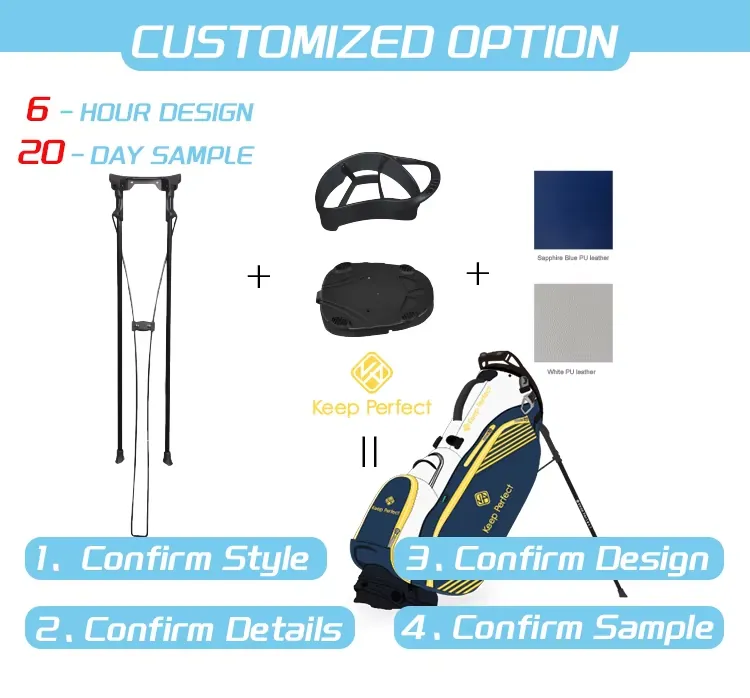
Within manufacturing there are two standard models, and choosing correctly affects cost and time. Under an OEM model you supply or specify the design and the factory builds to it; you control the product and hold its intellectual value. Under an ODM model the factory offers existing designs, patterns and tooling that you can brand and customise quickly, which lowers development cost and shortens time to market.
OEM suits a brand with a defined product vision and the willingness to invest in development. ODM suits a buyer who wants a proven design on the market fast. Many buyers blend the two, starting with ODM to build a line quickly and moving to OEM once the commercial case justifies custom development. A competent factory supports both and advises honestly on which gives you the better unit cost for your volume.
Development cost and lead time follow the same split: OEM typically involves sampling and tooling investment, while ODM can reuse factory-held patterns and get you to market sooner. Neither is universally cheaper; the right answer is the model that matches your speed, investment appetite and brand ambition. Asking a factory to present both an OEM quote and an ODM quote on the same spec is an excellent way to see the actual cost difference before you decide.
The Value of an Affiliated Factory Arrangement
Manufacturers are not all vertically integrated in the same way, and the ownership model affects what you can expect. An "affiliated" factory, one tied to a broader group or base but not a single brand, occupies a useful position: it has the maturity and capacity of an established producer without charging the brand markup of a brand-owned plant.
This structure is one reason specialist golf bag regions such as Quanzhou, China, compete well on capability. A producer that runs established capacity, holds independent audits and serves many brands is effectively selling production capability, not a name. For a B2B buyer the affiliated arrangement usually means reliable capacity, competitively priced MOQ and honest lead times, which are exactly the numbers a buyer needs to plan a practical sourcing strategy.
It also means the factory is effectively invested across many clients, which spreads its own risk and typically stabilises its pricing behaviour. Rather than a proprietary brand absorbing its attention, an affiliated producer concentrates on manufacturing excellence and responsive service, which is precisely the alignment a buyer wants when quality and cost control matter equally.
Risk and Reliability in Manufacturer Choice
Beyond capability and price, sourcing risk drives manufacturer choice. The risks most worth managing are missed deadlines, inconsistent quality, and dependency on a single supplier. A factory with multiple lines and stable capacity reduces schedule risk; a disciplined quality chain reduces consistency risk; and developing a second source or a steady long-term partnership reduces dependency risk.
For B2B buyers, an early low-volume test order serves as a risk screen on quality, communication and lead-time honesty before committing to bulk. It is a small, deliberate bet that buys reliable information. Factories that are confident in their process usually support test orders because they know the sample validates their capability, which is itself a signal of a professional partner.
Choosing Between Branded Bags and Own Label
Once you understand the manufacturing layer, the brand-versus-own-label decision simplifies. If your priority is margin, control and building an asset you own, manufacturing your own line through OEM/ODM is the stronger choice because it removes name markup and returns the economics to you. If your priority is launching with proven consumer recognition and minimal effort, reselling an established brand gets you to market faster but caps your margin and leaves you dependent on the brand.
Many successful operators do not choose one path for all products. They carry established brands for credibility and customer pull, while building a private-label line for margin and differentiation. The ratio depends on your market, shelf network and brand-building goals. What the manufacturer comparison guarantees is that whichever path you take, you will know the real cost and capability underneath.
How to Engage a Manufacturer With a Clear Brief
Engagement begins with a specification brief, not a price request. Define the fabric class, stand type, divider configuration, zipper grade, base plate construction, pocket layout and volume in writing, so the factory quotes a real product rather than a guess. Request the MOQ, sampling and bulk lead times alongside the quotation, and ask for the quality control stages so you can evaluate process as well as price.
Send the brief to several shortlisted manufacturers and compare on the capability metrics, quality plan and commercial terms together, not on unit price alone. The lowest price is rarely the best value once lead-time risk, quality variance and communication friction are included. A structured comparison produces a defensible choice you can stand behind.
Get the brief, the sample and the inspection plan right, and much of the comparison is essentially complete before you commit. The remaining variable, relationship quality, is best tested by a first order handled with clear communication and agreed milestones in writing.
Be explicit about your observation and inspection expectation, such as pre-shipment inspection on sampled units, so the commercial terms lock in the quality assurance you intend to rely on. Written specifications, agreed tolerances and a documented inspection plan turn a handshake into a reproducible, enforceable process that de-risks every subsequent order.
Building a Long-Term Sourcing Relationship
Manufacturing relationships improve with continuity. A factory that learns your specification, quality bar and market will serve you faster and more accurately over time, and volume history typically attracts better terms and production priority. Long-term partners are also first to hear about capacity, materials and scheduling opportunities that one-off buyers miss.
Establish regular quality reviews, agreed inspection standards and a clear communication channel. Reviewing quality data each season, rather than only at launch, catches drift early and protects the consistency your end customers rely on. In golf bag manufacturing, where the same factory may build for many brands, a well-managed relationship is what earns attention to detail and dependable lead times over the long term.
A reliable after-sales posture, including spare straps, stand springs and a defined response to field issues, completes the picture. The most durable sourcing relationships are transparent about support as well as price, and factor that support into the comparison rather than treating it as an afterthought.
Practical steps that cement the relationship include a shared production calendar, agreed communication windows at key milestones such as fabric confirmation and pre-shipment, and visibility of any material or schedule change well before it becomes a problem. Factories that manage information this way are treating you as an ongoing partner rather than a single transaction, and that posture is worth weighting heavily in your comparison.
Certification and Compliance in Manufacturer Selection
Certification and compliance are underrated comparators in manufacturer choice because they are objective and hard to fake convincingly. A third-party audit such as an SGS factory review verifies premises, fire and safety standards, labor practices, environmental handling and documented processes. A factory that has passed one, for example in March 2026, provides evidence-backed reassurance rather than a marketing assertion.
Compliance also has market consequences. If you sell into regions that enforce supply-chain due diligence, labor or environmental standards, your factory's compliance becomes your compliance. Choosing a manufacturer that documents its standards protects you from regulatory surprises and from reputational risk embedded in an undocumented supply chain. In a buyer's evaluation, verified certification should be weighted as hard evidence of a professional operation.
Above all, anchor your decision in written records: specifications, quotations, audit details and agreed inspection plans. Documentation is the durable evidence of a manufacturer's capability, while a memorable pitch is not. The buyer who asks for the documentation and reads it is the buyer who consistently picks the right factory.
Distributors and brand owners should ask to see the audit scope and any corrective-action records, not just the certificate. How a factory responds to audit findings tells you more about its process maturity than the audit date itself.
Reading a Factory's Quality From a Single Sample
The most practical way to test a manufacturer before committing is to order a sample and read it like a professional. Check fabric density by feel and weight against the stated denier, open and close every zipper repeatedly to confirm smoothness and tooth alignment, examine seam stitching for even, tight coverage, and test the stand through many deployment cycles. These simple checks catch most of the quality variance that distinguishes a good factory from a poor one.
Look also at the finishing details that reveal care: thread tension on the interior, binding and piping alignment, grommet reinforcement on load points, and the neatness of embroidered logos if branding is present. A factory that controls these mundane details is a factory that controls quality generally, and a reminder that the same disciplines underpin every bag it ships.
Finally, use the sample to test responsiveness indirectly. The speed and clarity of the sampling quote, the communication during sampling, and the factory's willingness to adjust a specification all preview the working relationship of a full order. A good sample from an unresponsive partner may still be a difficult supplier at scale.
FAQs: Manufacturers
- How do I compare golf bag manufacturers?
- Compare production lines, certified capacity, quality control stages, MOQ, sampling and bulk lead times, and the brands or markets served. An audit like a 2026 SGS review strongly signals an established facility.
- What MOQ and lead time do factories require?
- A common standard is a 200-piece MOQ with test orders from 100 pieces. Sampling takes 10-20 days and bulk production 45-60 days across several lines.
- Should I buy branded or make my own via OEM/ODM?
- Branded bags carry name markup up to several times factory cost. OEM/ODM gives you control of specification and price, the better route for volume, private label and margin control.
- What quality checks matter when comparing factories?
- Incoming fabric and hardware inspection, in-line sewing checks, zipper and seam testing, stand function tests, and final random sampling before packing. Independent audits add another layer.
- What capacity should I look for?
- A mid-scale producer with several lines, a few hundred machines and staff, and monthly capacity in the hundreds of thousands can flex across designs and markets reliably.
- Is sourcing from China cheaper than a Western brand?
- For comparable specification, factory-direct sourcing from an established base like Quanzhou is typically far cheaper because brand, marketing and retail margins are removed. You pay for capability and quality assurance.
Sources
- SGS Factory Audit and Certification Services
- The R&A Equipment & Standards Resources
- United States Golf Teachers Federation Equipment Reference
Golf bag manufacturer comparison 2025 focuses on factory audit status, MOQ, lead time, material sourcing and QC discipline rather than brand logos.
Author: QUANZHOU JUNYUAN BAGS. Capacity and lead-time figures reflect the example production base, founded 2014, founder active since 2004. For an OEM/ODM brief contact service@junyuanbags.com or +86 17750020688.